









Designing with PET felt: what architects will want to consider
PET felt offers design freedom, acoustic performance and a beautiful appearance in one material. But anyone working with PET felt soon discovers that a strong design requires more than just an attractive concept. Thickness, radius, installation, seams and modularity all play an important role in the end result. It is important to take these factors into account, so you can get the most out of your design.
1 September 2026
Start with the right thickness of felt
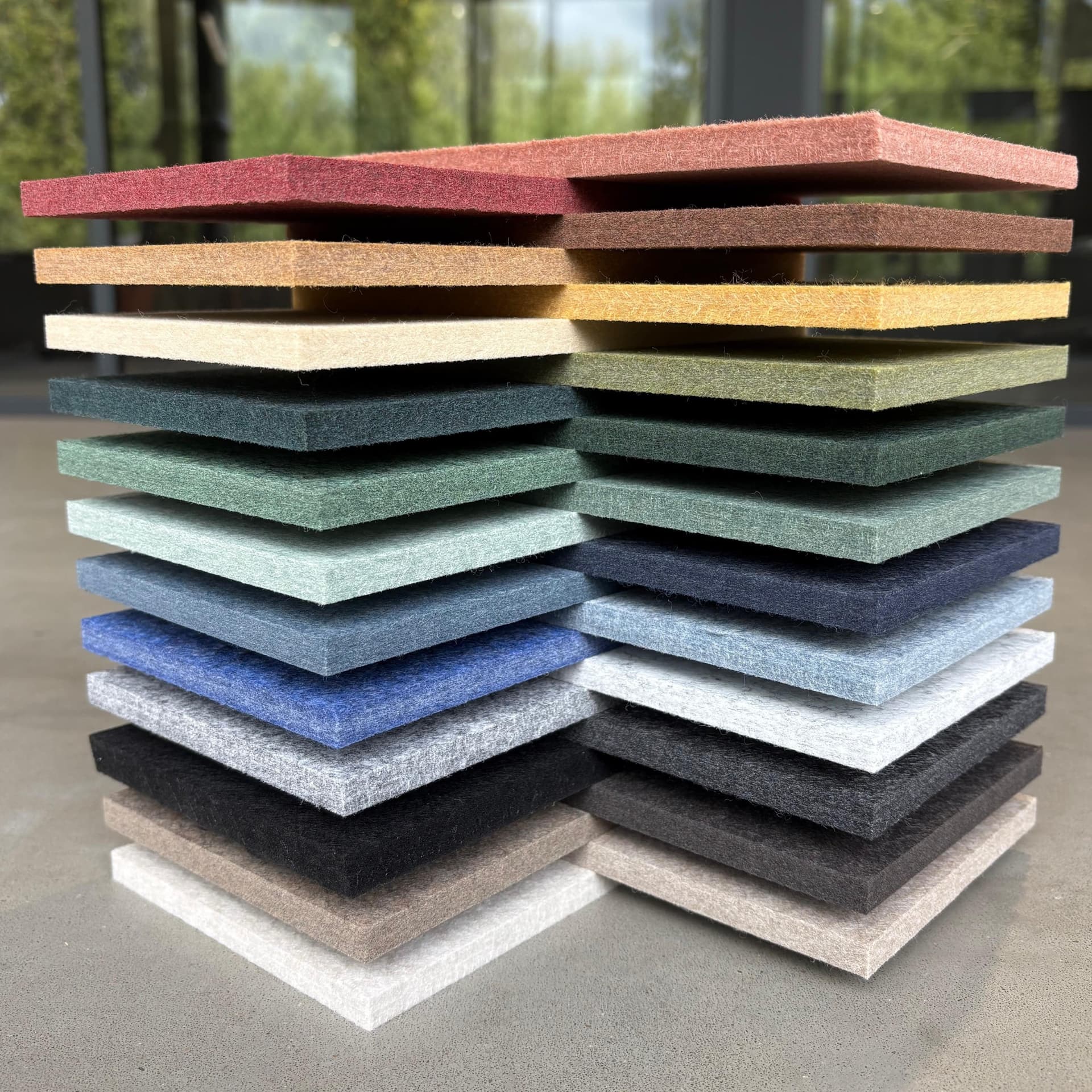
The thickness of the material affects both its appearance and its technical possibilities. PET felt is available in various thicknesses, with each version having its own applications.
Thinner material is suitable for sleek finishes, greater design freedom and cutting options. Would you like to create more depth or achieve a strong acoustic effect? Then thick felt offers more possibilities.
When designing felt panels, it is therefore important to determine in advance which function is central:
- Decorative
- Acoustic
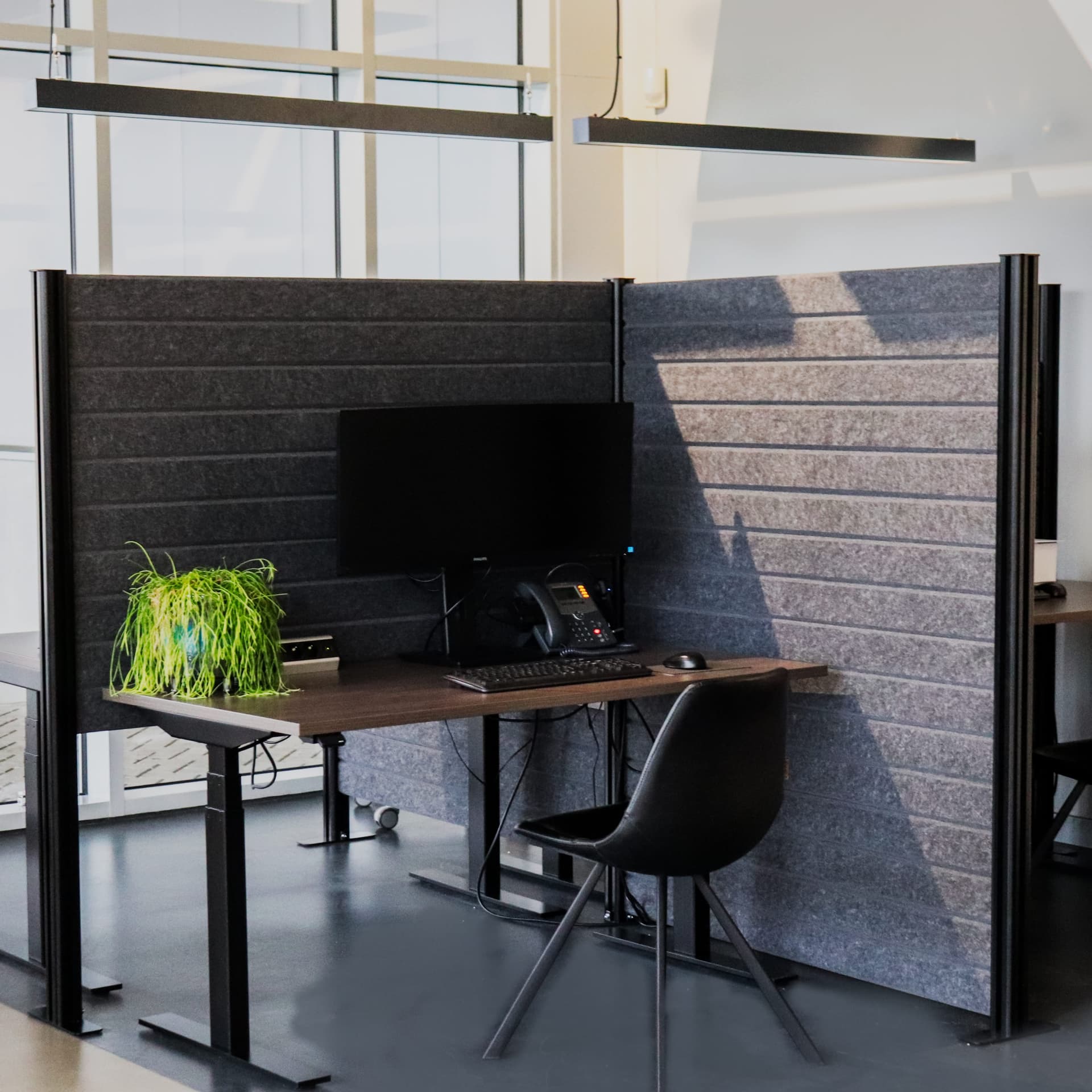
- Dividing
- Structural
The intended function often directly determines which thickness is most suitable.
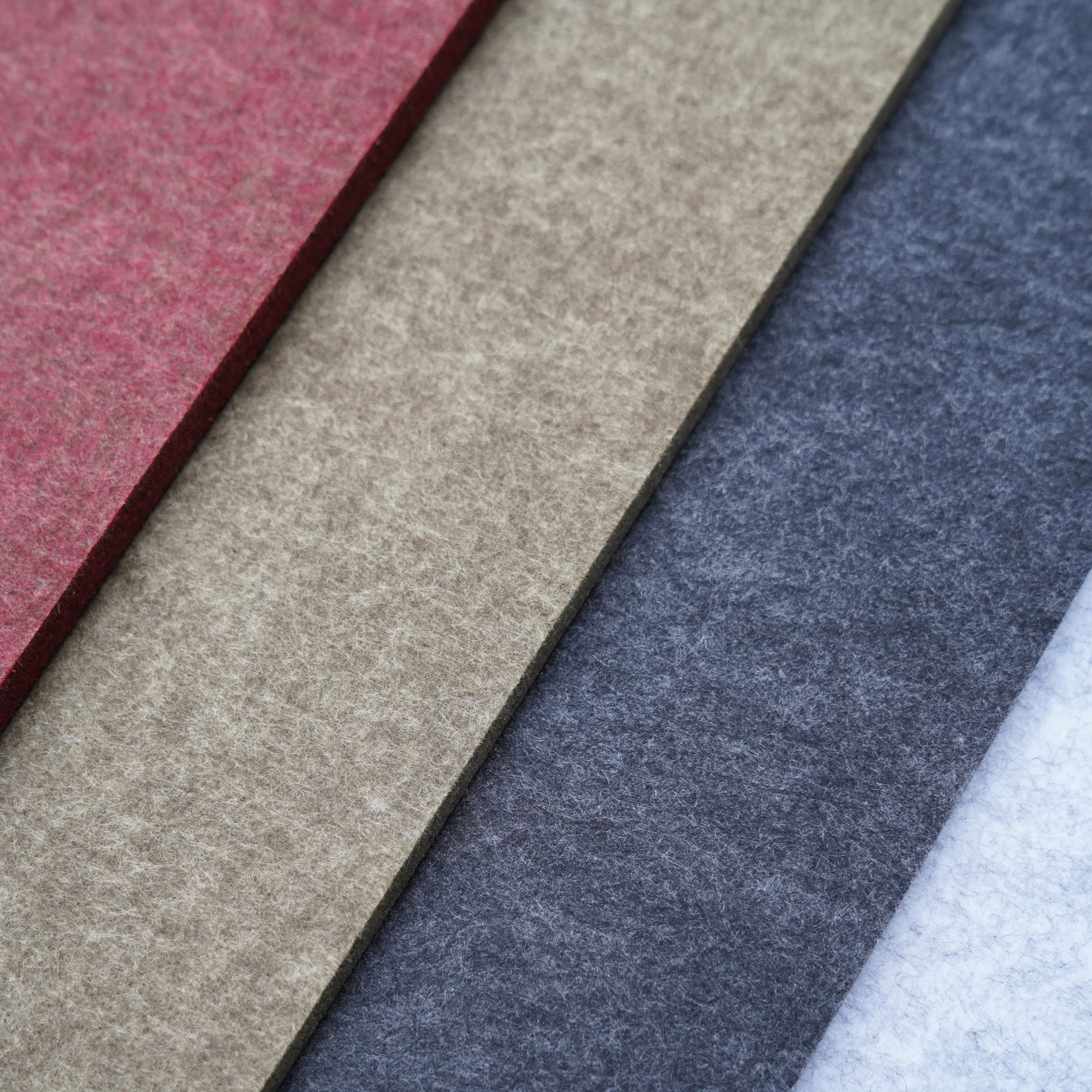
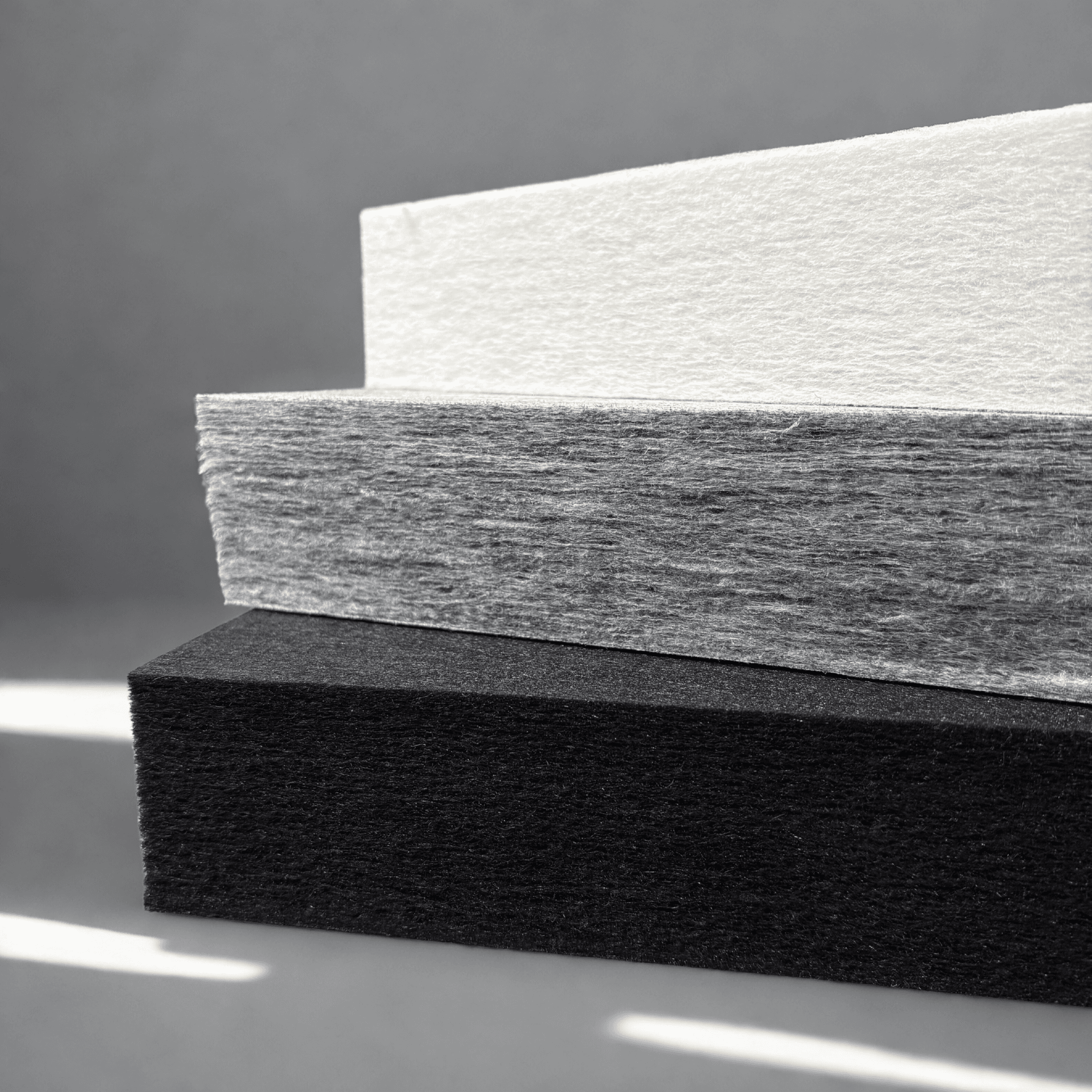
Consider bend radius and design flexibility
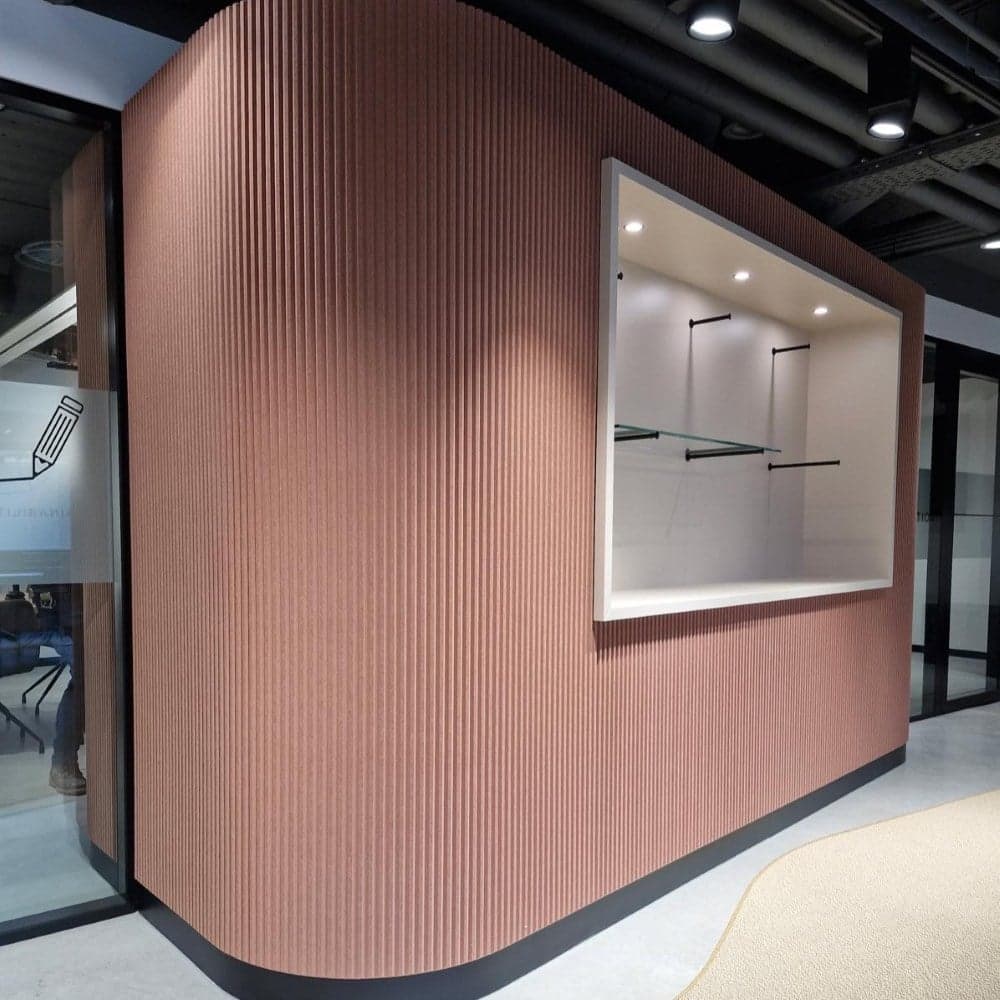
A major advantage of PET felt is that it is ideally suited to organic shapes. However, every material has its limits. When designing curved applications, such as wall finishes, column cladding or ceiling features, it is important to consider the chosen production technique and the minimum radius at an early stage.
Minimum radius per cutting technique
The minimum radius depends on the selected operation.
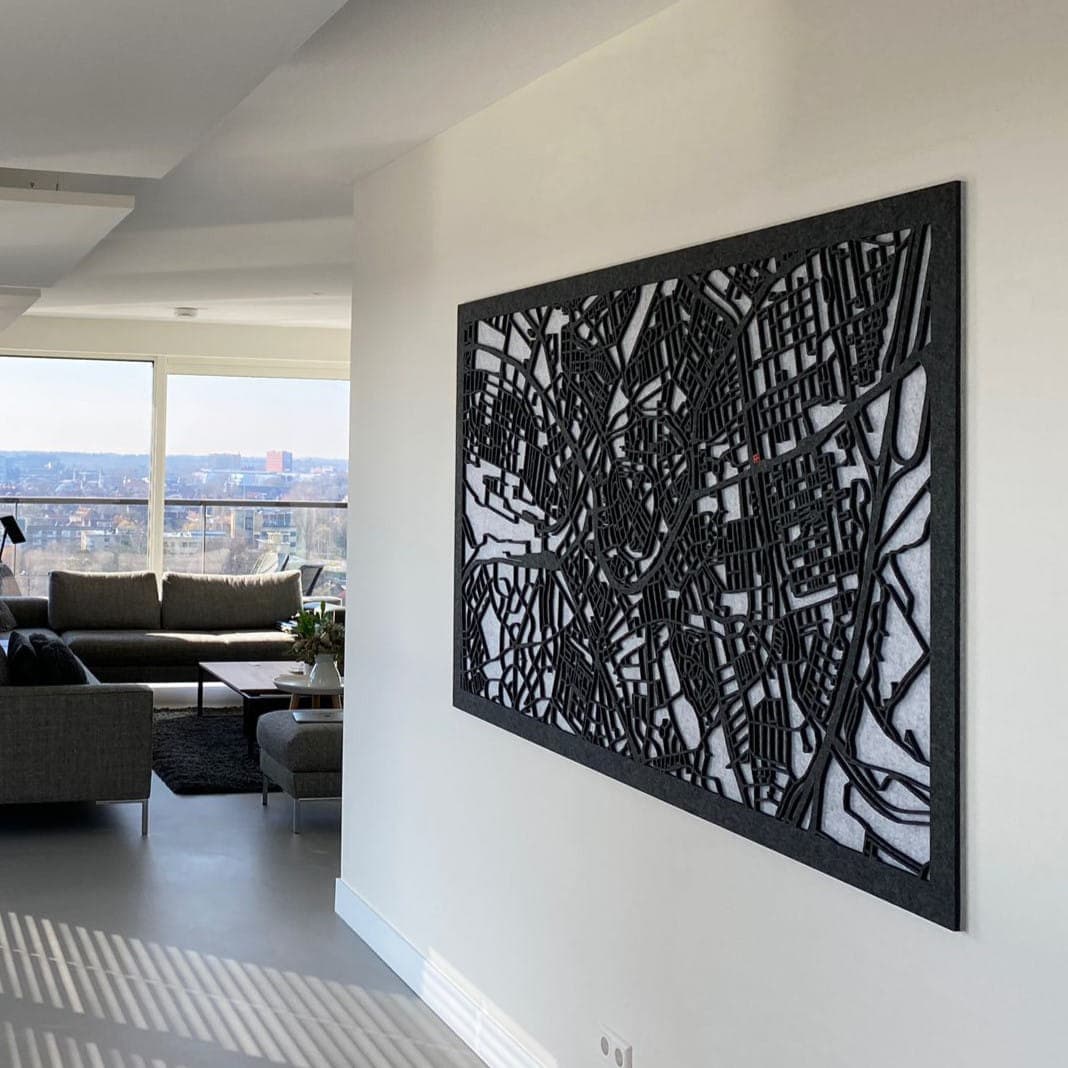
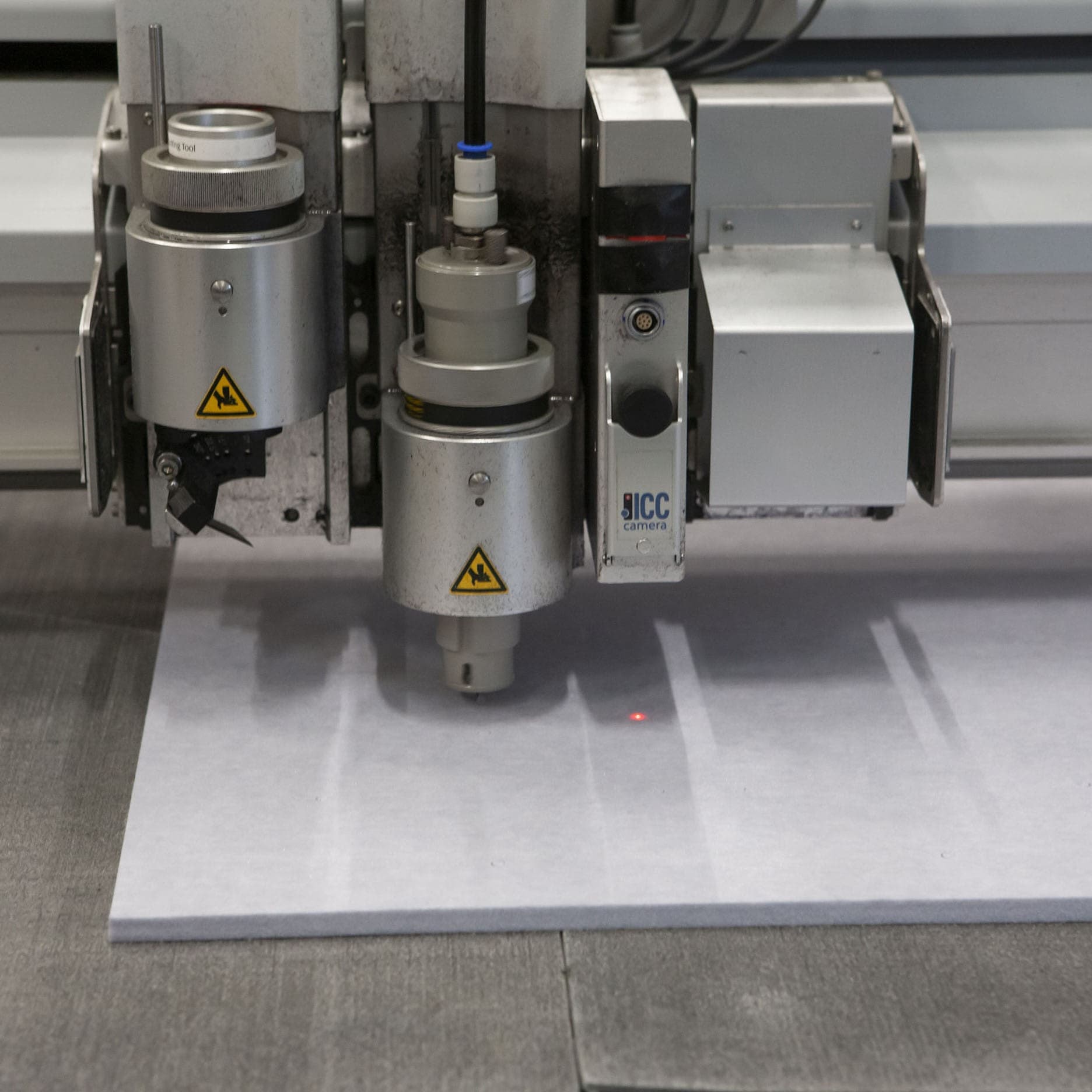
For a standard thru-cut, a minimum radius of 3 mm applies to rounded corners. If you use techniques such as a bevel cut (bevelled edge) or V-cut, a minimum radius of 50 mm is recommended for a clean final result. Smaller radii are often technically possible, but may affect the finish.
Bending with notches
For curved applications, there are several solutions. Placing multiple cuts next to one another creates a flexible panel that can bend in one direction. This makes it possible to fit acoustic wall cladding neatly around a curved wall or column.
For a 9 mm panel, we recommend a cut depth of 8 mm. The more cuts are placed next to each other, the smoother the bend will be.
Maximum design freedom with V-cuts
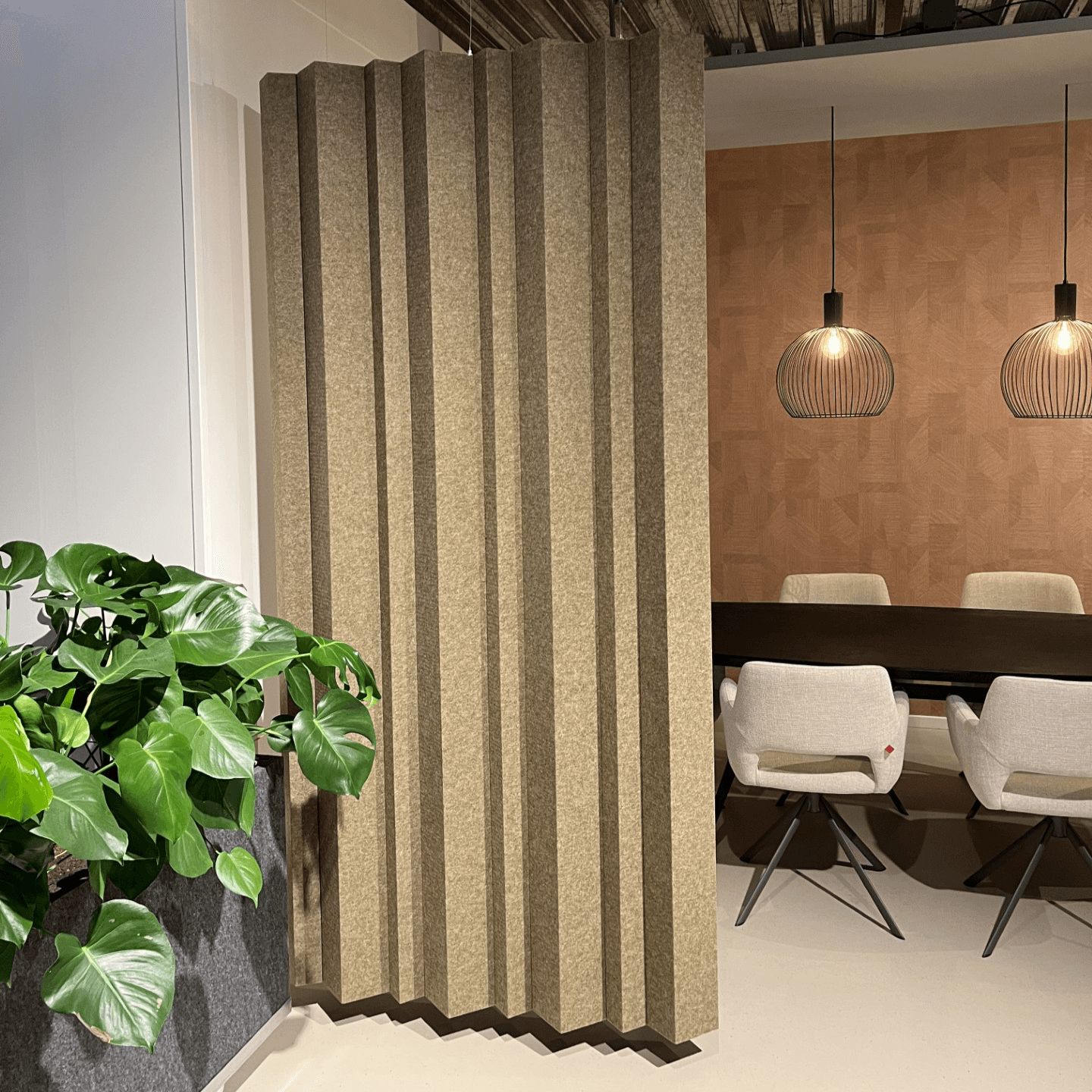
If you want maximum design flexibility, a V-cut offers additional possibilities. Unlike a groove, a panel with V-cuts can bend in both directions. This allows you to choose a flat finish or, alternatively, a relief-like design with added depth.
This technique is used, among other things, for Flex Wall and makes it possible to create both straight and organic shapes with acoustic felt. For a 9 mm panel, an 8 mm-deep V-cut is generally used.
Bending with thru-cuts
For curved applications where both flexibility and appearance are important, thru-cuts offer an interesting solution. By placing elongated cut-outs close together, a flexible panel is created that can bend. The closer the cut-outs are to one another, the more easily the panel conforms to a curved wall, column or other organic shape.
In addition to the functional benefits, the cut-outs also create an attractive pattern on the surface. This allows you to combine design freedom with a unique design. The distance between the cut-outs can be adjusted to suit the desired bending radius and appearance of the panel.


Keep enough material left over
In addition to radius and bends, the distance between cut lines also plays an important role. For a thru-cut, a minimum distance of 4 mm between two cut lines is recommended. This keeps the material sufficiently strong and reduces the risk of damage.
Especially with complex patterns in a felt wall panel or larger compositions of felt wall panels, this is an important point to consider.
Assess feasibility early in the design process
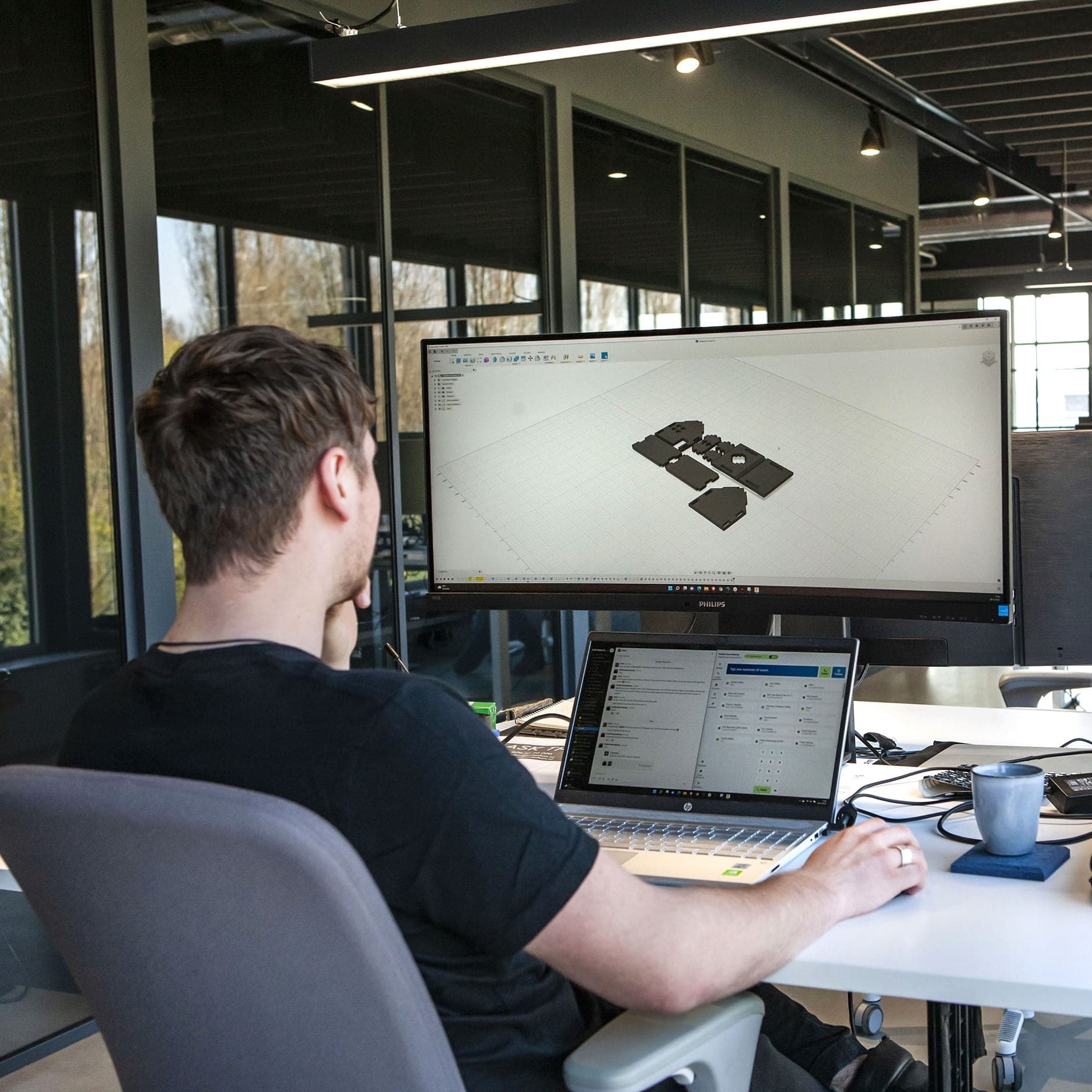
When working with bespoke PET felt, it is advisable to have technical drawings assessed for feasibility at an early stage. This helps prevent a design that looks perfect digitally from still having to be modified during production due to radii that are too small, insufficient material strength or unrealistic bends.
By taking radius, cutting techniques and material strength into account as early as the design phase, you get the most out of the design freedom that felt has to offer.

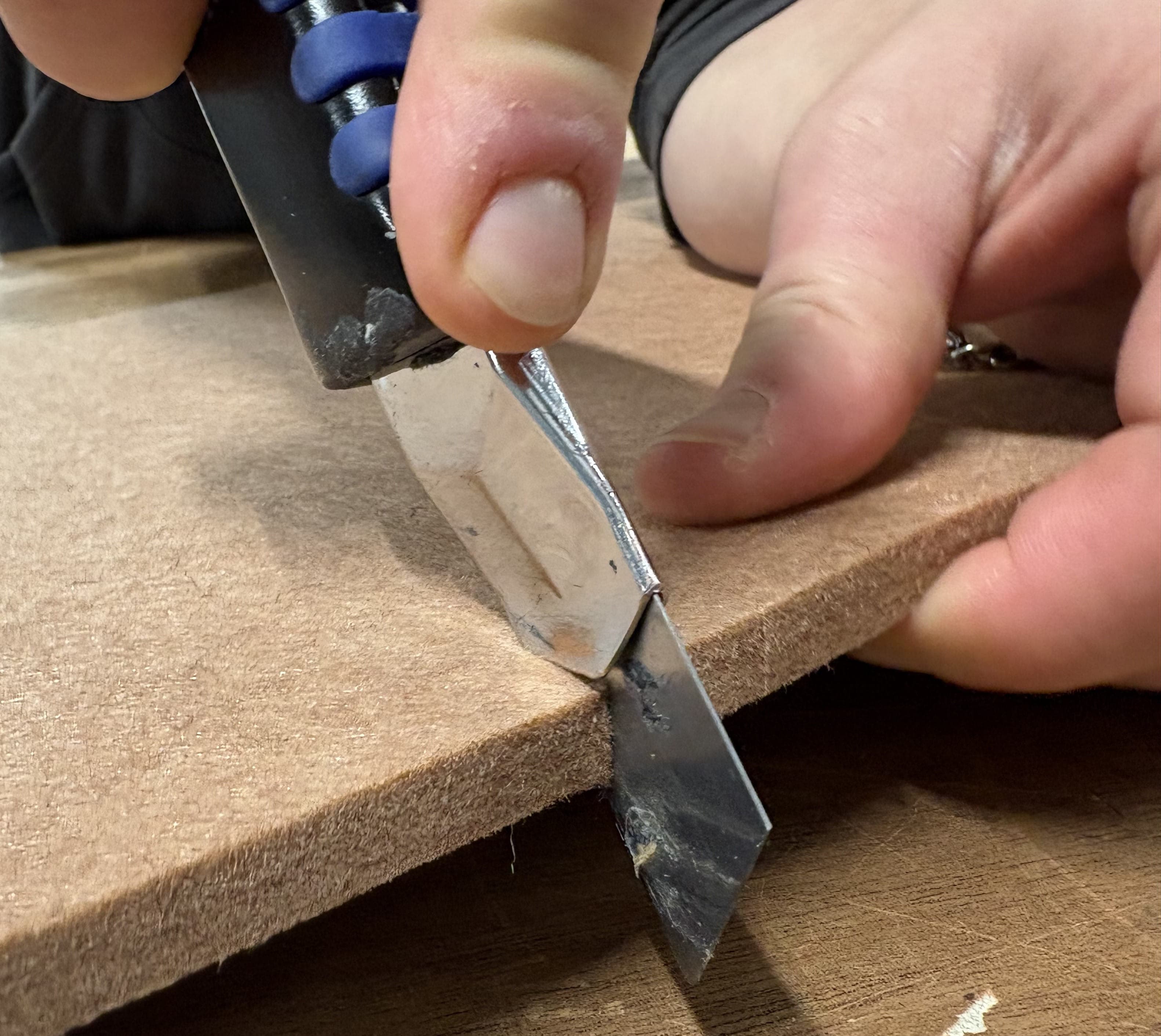
Smart assembly starts right in the design phase
The installation method affects both the design and the detailing. For example, a felt wall panel can be bonded directly to a wall, mechanically fixed, or form part of a modular system.
Therefore, it is wise to ask yourself the following questions during the design process:
- Does the system need to be removable?
- Is replacement of individual panels required?
- Are there pipes or installations behind the material?
- How is maintenance carried out?
Think about seams and sightlines
With every design using PET felt, you have to take sheet sizes into account. This creates seams, unless a component can be produced entirely from a single sheet. The maximum sheet dimensions vary depending on the thickness, so it is important to take this into account at an early stage.
Joints don’t have to be a limitation. In fact, they can become a valuable part of the design. By consciously determining the position of joints, you can add rhythm, direction and structure to a space.
Important points to note are:
- Pattern alignment
- Symmetry in the design
- Connections at corners
- Transitions to other materials
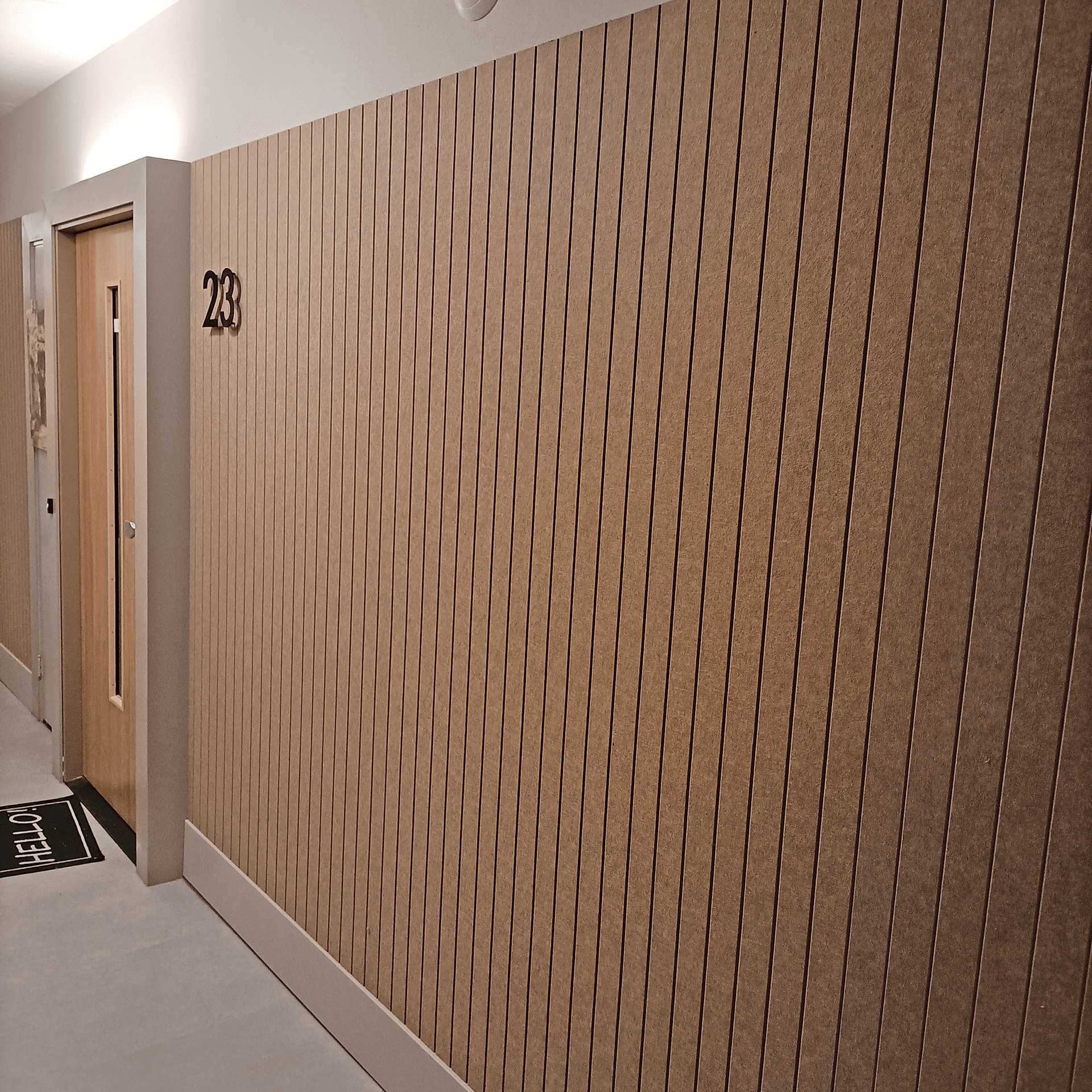
In addition, there are various techniques for making seams less visible or even practically disappear. A commonly used solution is to apply a bevelled edge (bevel cut). The edge of the felt is cut at an angle, allowing adjoining panels to fit together more seamlessly and making the seam considerably less noticeable. This technique is often used for larger surfaces, such as a series of felt wall panels.
Seams can also be deliberately integrated into the design through the clever use of patterns, V-cuts, colour blocks or a modular structure. Rather than being a technical necessity, they thus become part of the overall look.
For a high-quality look, it is wise to take these details into account early in the design process. The earlier seams, connections and production techniques are considered, the more attractive and technically robust the final result will be. Our team will be happy to advise you on the best option for your project.

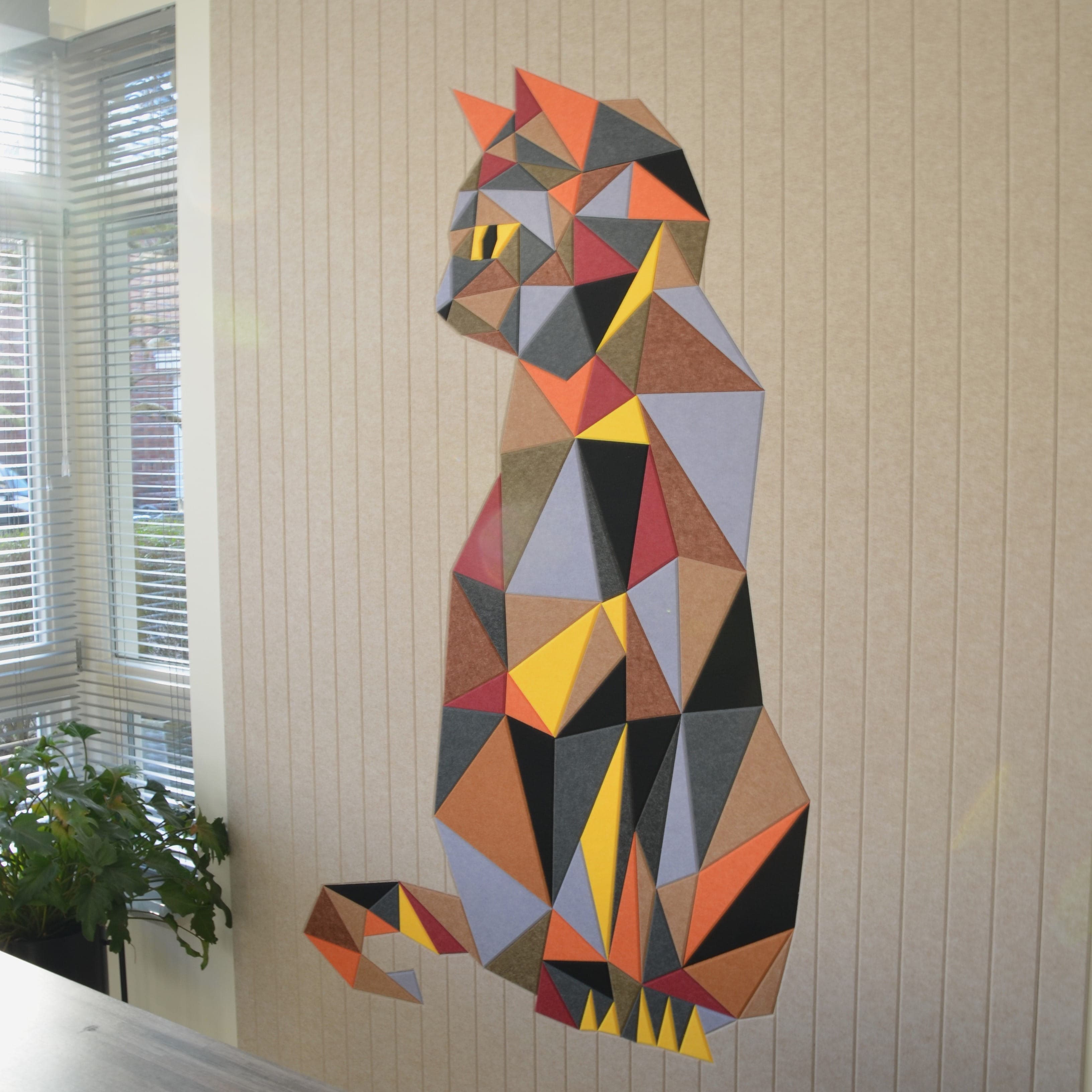
Modular thinking offers greater design freedom
Modular design is becoming increasingly important in interior architecture and commercial interiors. Not only because of efficiency, but also from a sustainability perspective.
Building a system from separate felt panels creates flexibility. Panels can be replaced, expanded or reused without having to renew an entire wall.
For applications such as larger surfaces with acoustic wall decoration, modular thinking also ensures more efficient production and installation.
For architects, this offers additional opportunities to develop patterns, colour combinations and bespoke solutions without compromising technical feasibility.
Acoustics require more than just choosing materials
Although acoustic felt is known for its sound-absorbing properties, the final result is determined by more factors than the material itself.
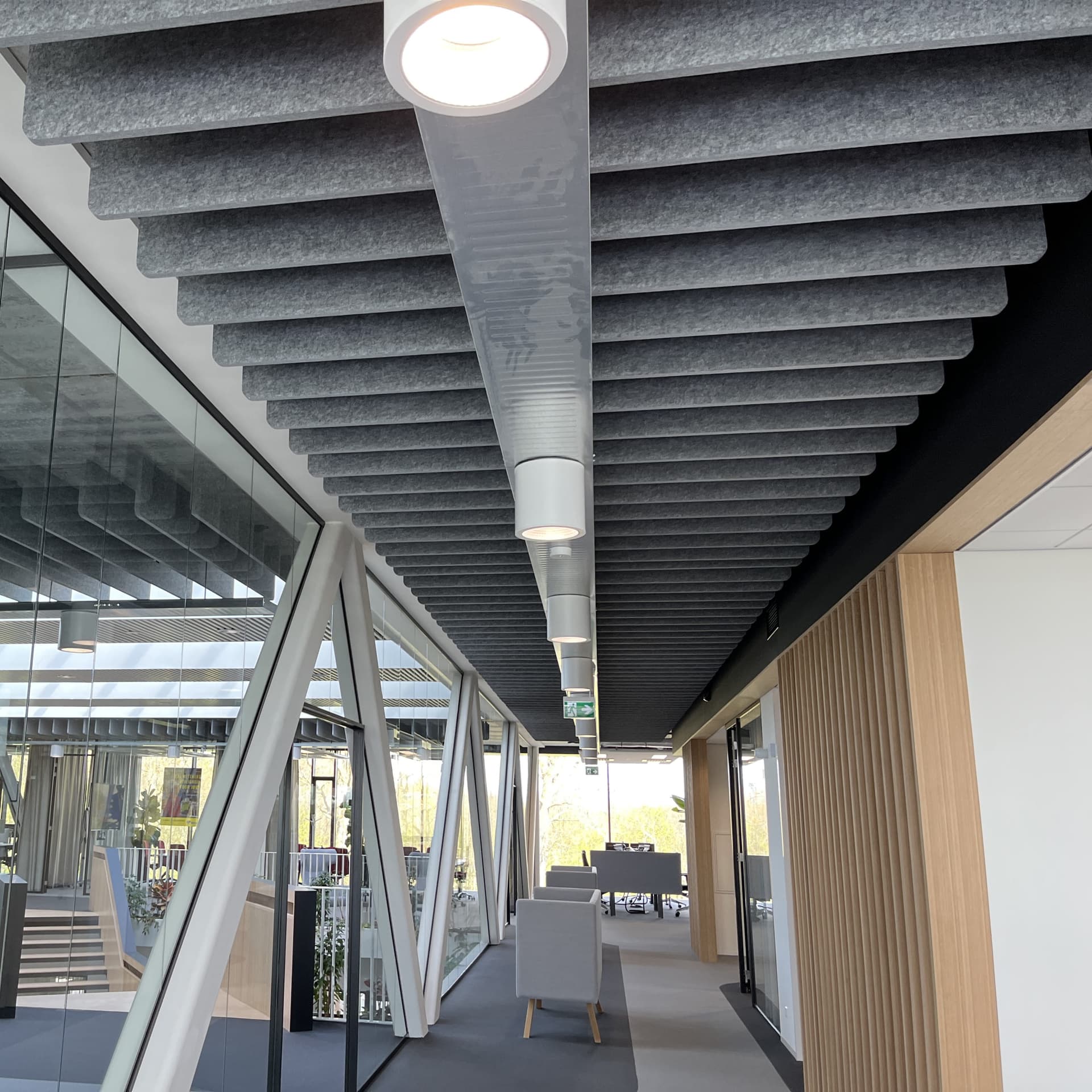
The position of the panels, the distance from the sound source, the amount of absorbent surface area and the furnishing of the room all affect the acoustic performance.
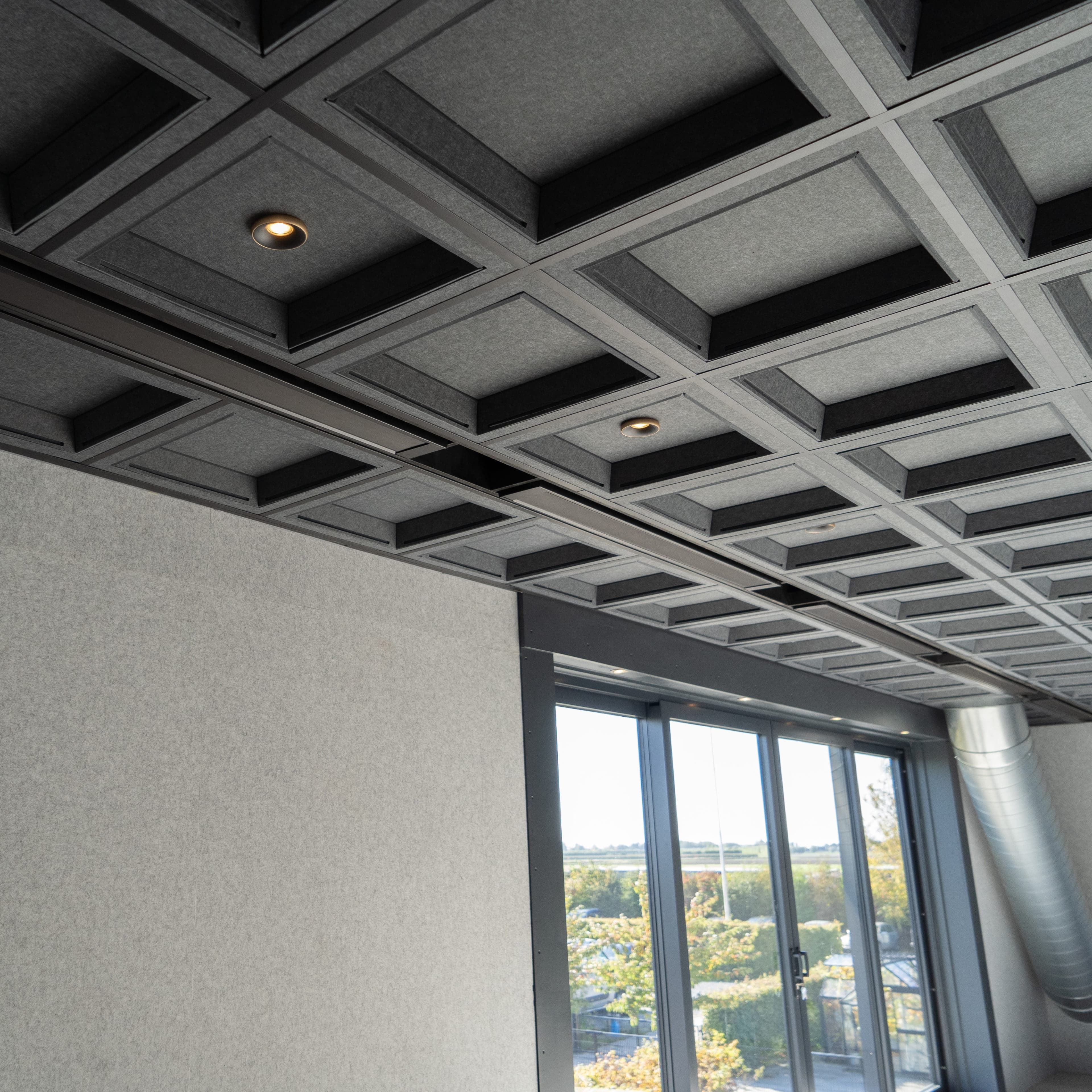
That is why it is important to view acoustic wall covering not only as an aesthetic element, but as part of a broader acoustic strategy.
Especially in offices, meeting rooms, educational environments, listed buildings and hospitality projects, a well-designed solution can contribute to greater comfort, concentration and quality of use.

Design from the material, not despite the material
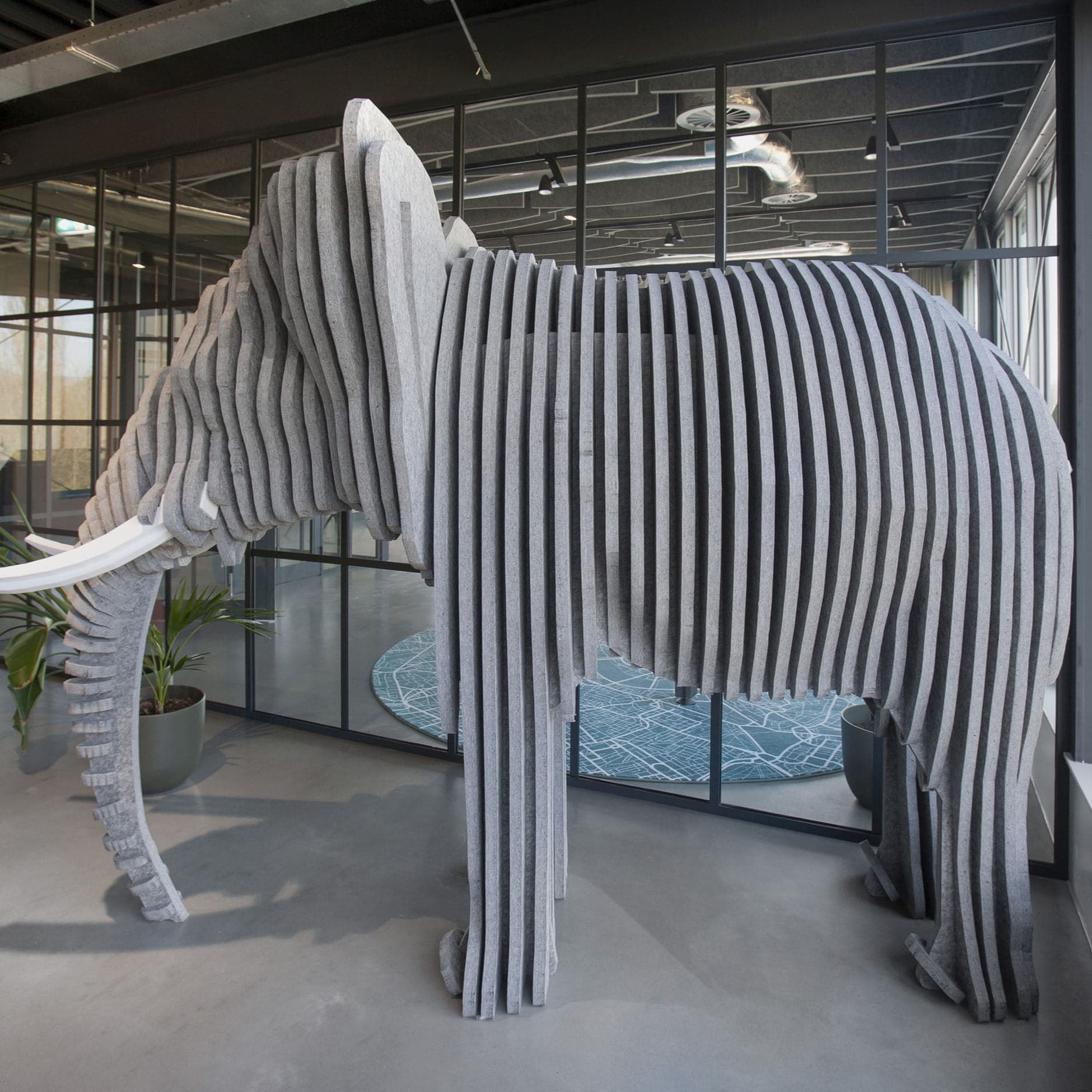
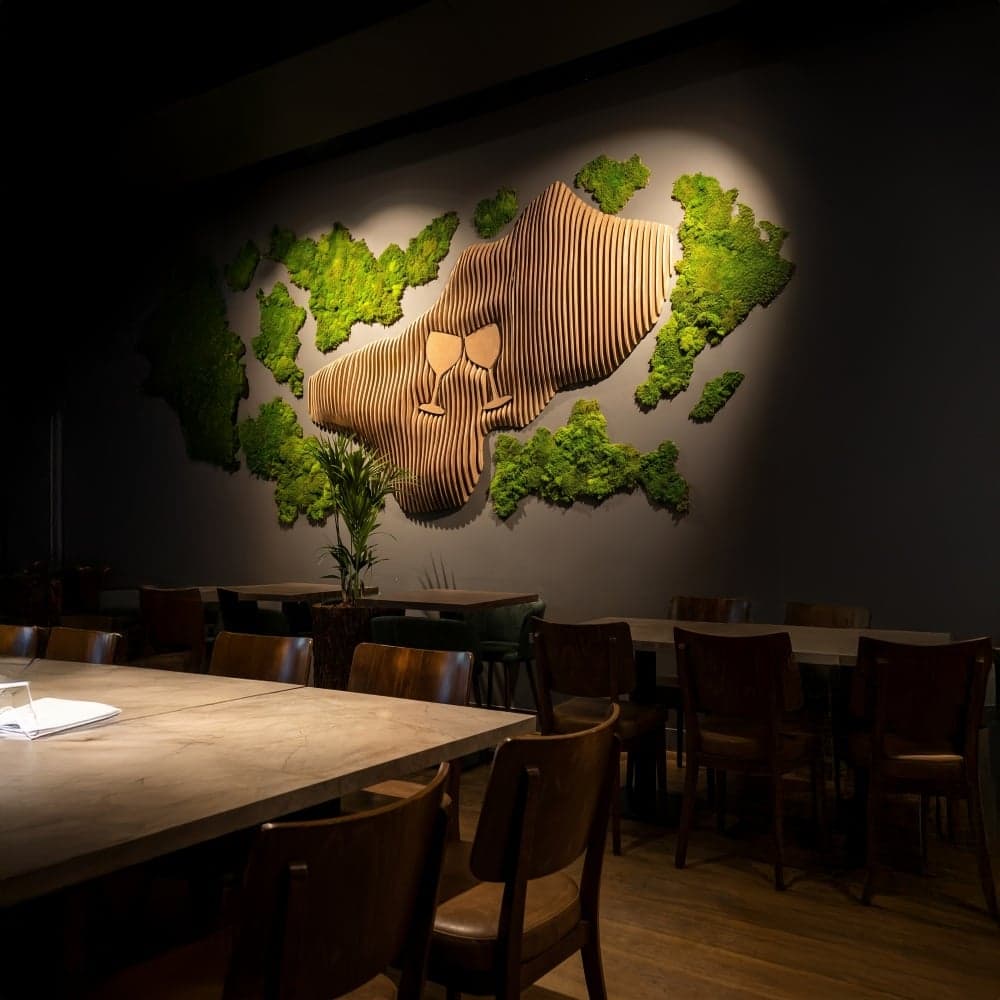
The most beautiful applications emerge when the material is part of the design from the outset. By taking thickness, bend radius, mounting, seams and modularity into account, you can make the most of everything PET felt has to offer.
Whether you choose a decorative felt wall panel or a complete system of felt wall panels, a well-considered design ensures a better end result and smoother installation.
We’re happy to think along with you about the technical possibilities of PET felt, so that your design not only looks beautiful, but is also perfectly feasible.