










Acoustic wall covering or ceiling solution: which one better suits your design?
If you want to improve acoustics, you quickly arrive at two main choices: work on the wall or on the ceiling? In practice, this isn't a purely technical consideration. For architects and interior designers, it's primarily a design question. Because the location where you apply an acoustic solution affects not only the sound but also the appearance, sightlines, and spatial experience. So, the question isn't just what works acoustically, but especially: what best fits your design?
Yentl
19 May 2026
When acoustic wall coverings are logical
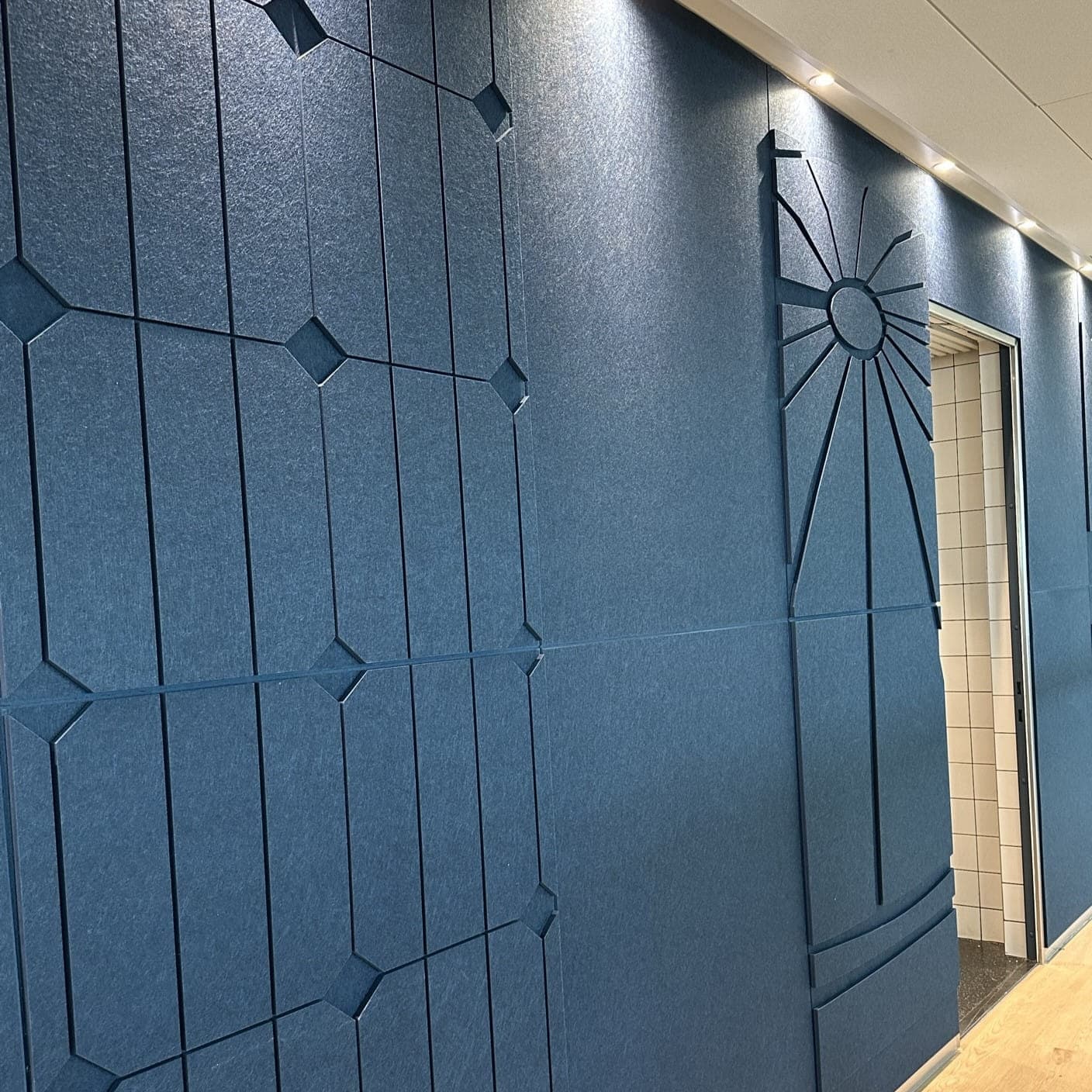
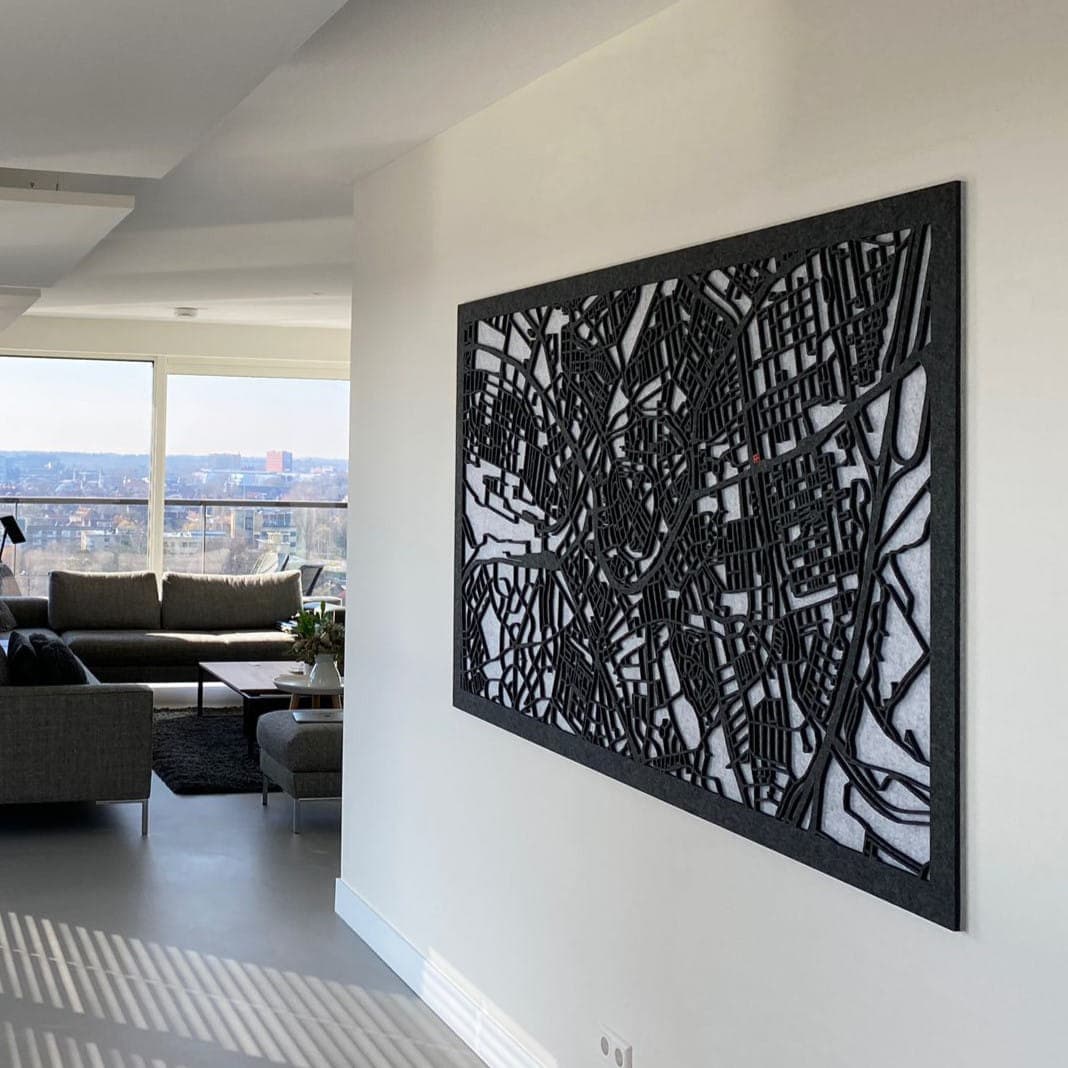
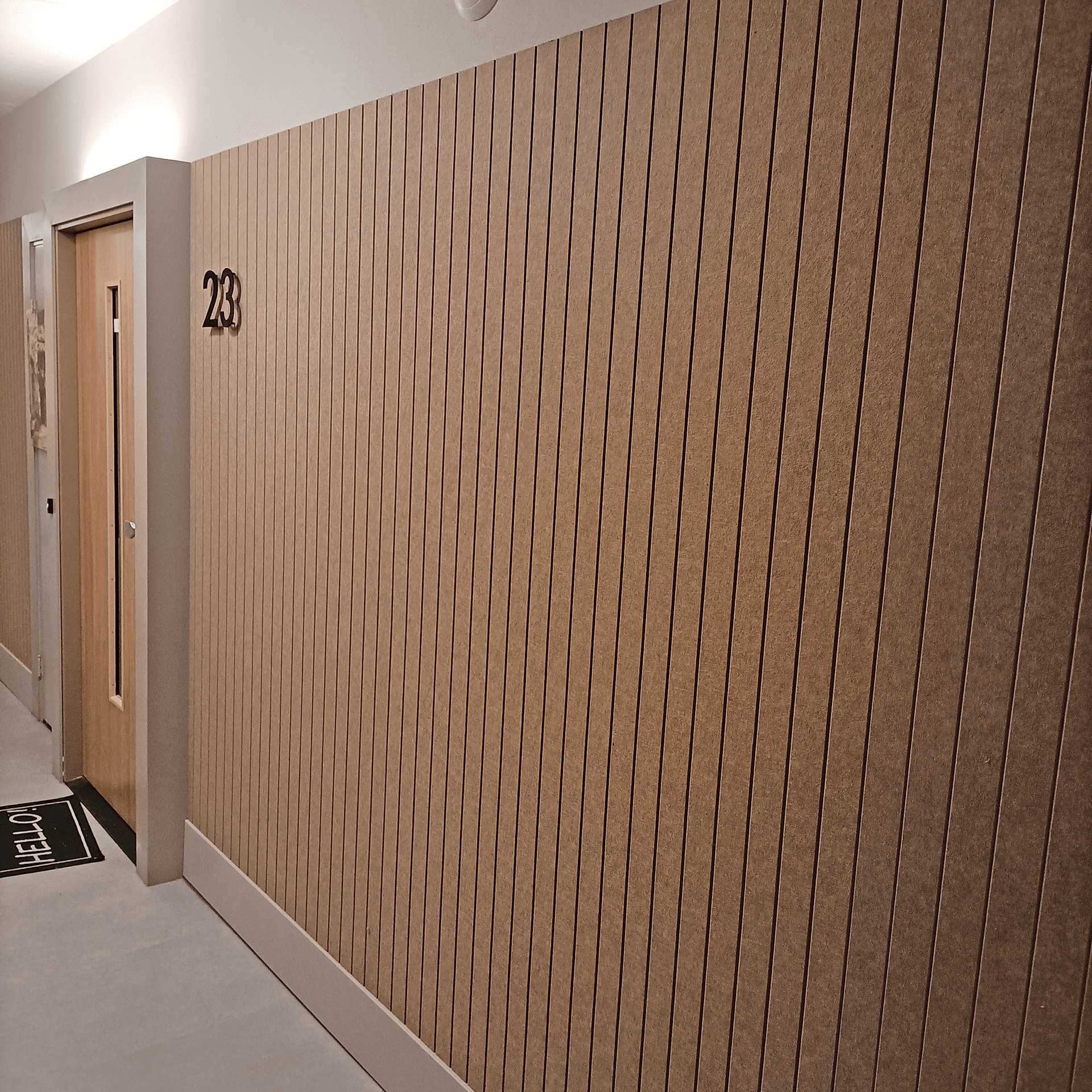
Acoustic wall covering is often a good choice when you want a solution to be a visible part of the interior. On the wall, you can work with colour, shape, rhythm, and detail. This gives a material like acoustic felt not only a functional role but also an aesthetic one.
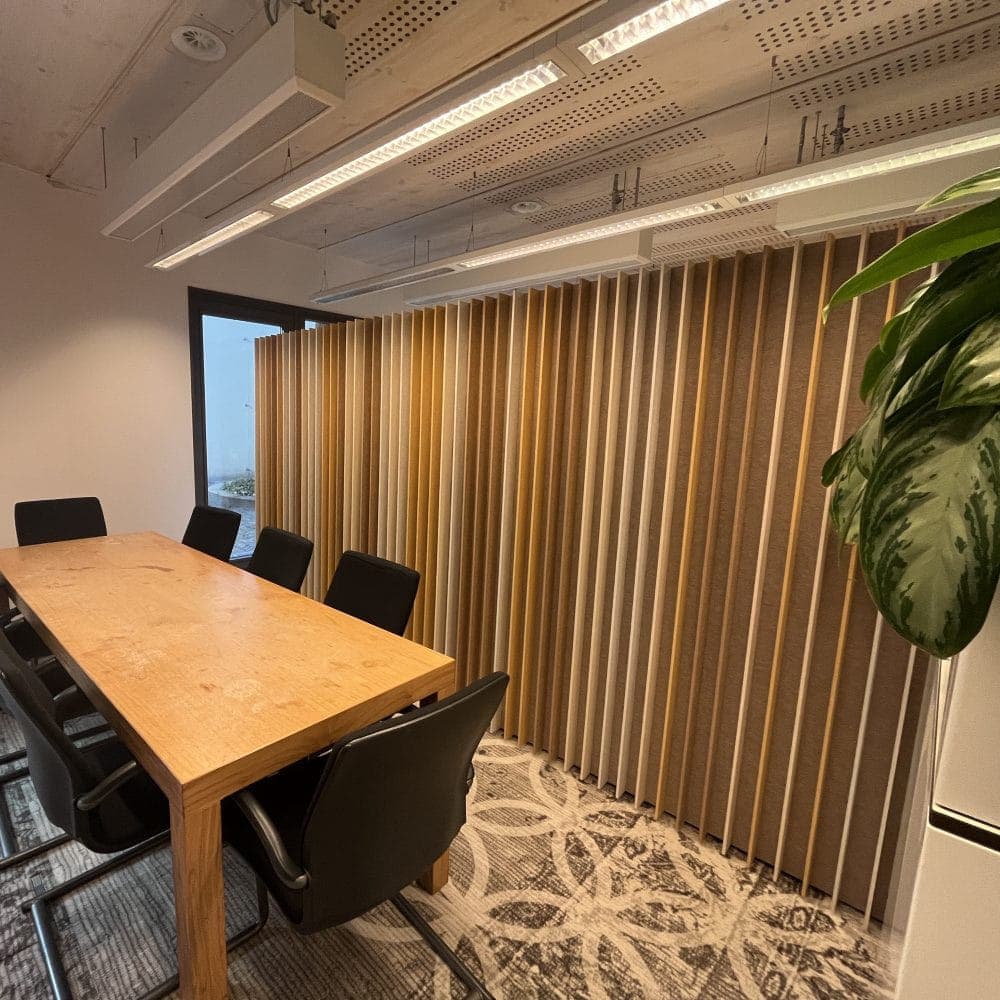
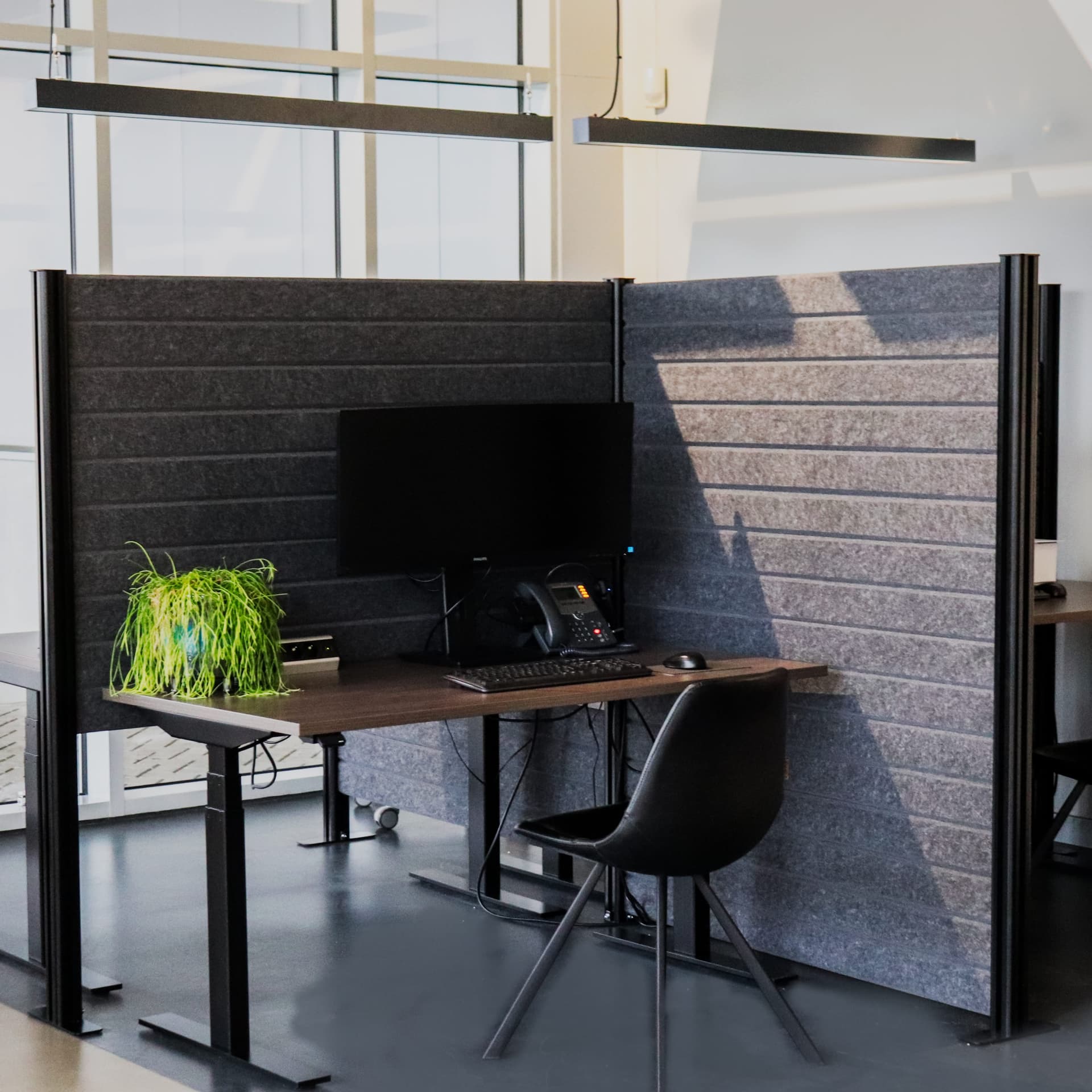
An felt wall panel is, for example, particularly suitable in spaces where you want to create a focus wall, mark zones, or find a surface that adds both calmness and identity. Think of meeting rooms, reception areas, restaurant sections, or open workspaces where you want to improve acoustics without adding weight to the design.


When a ceiling solution is more suitable
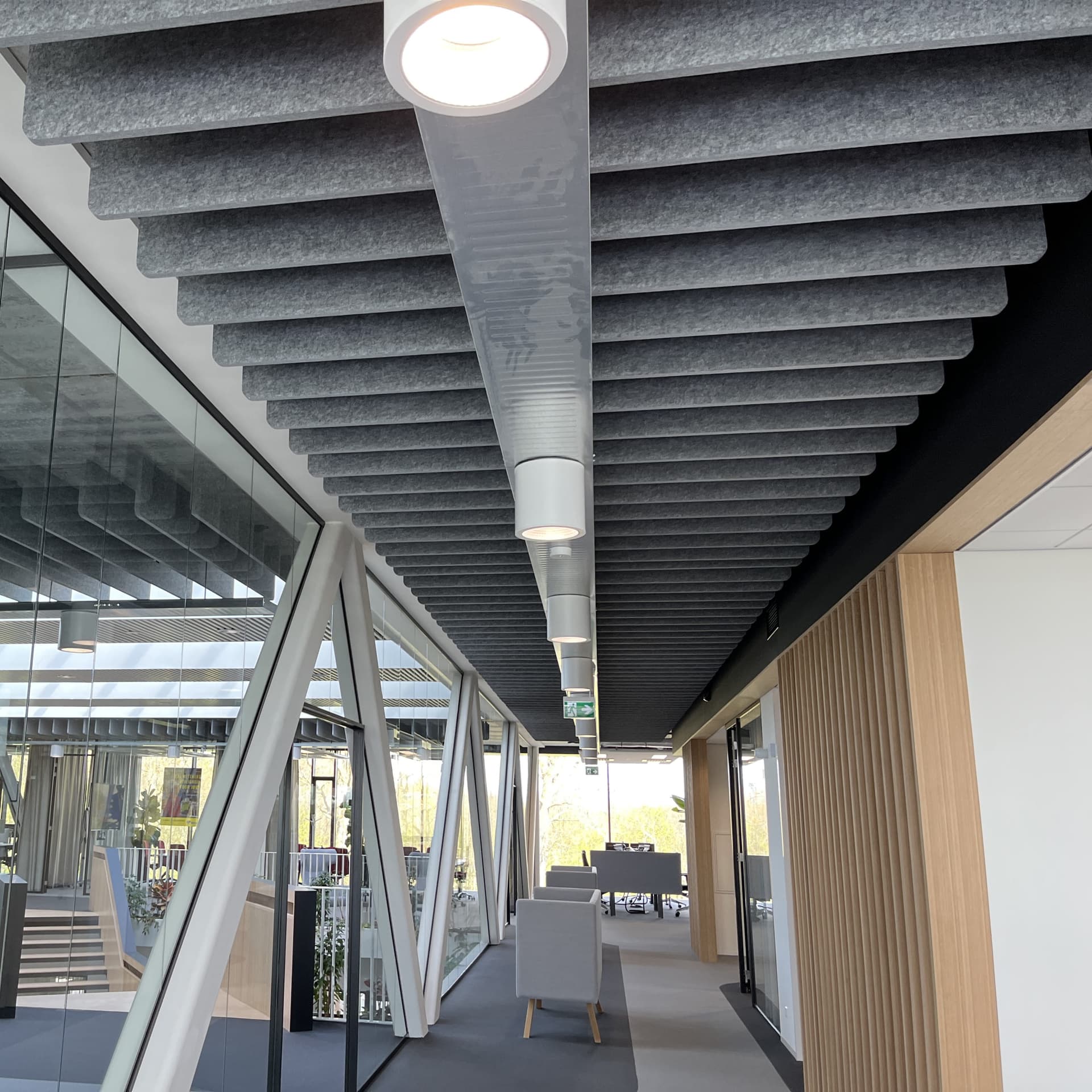
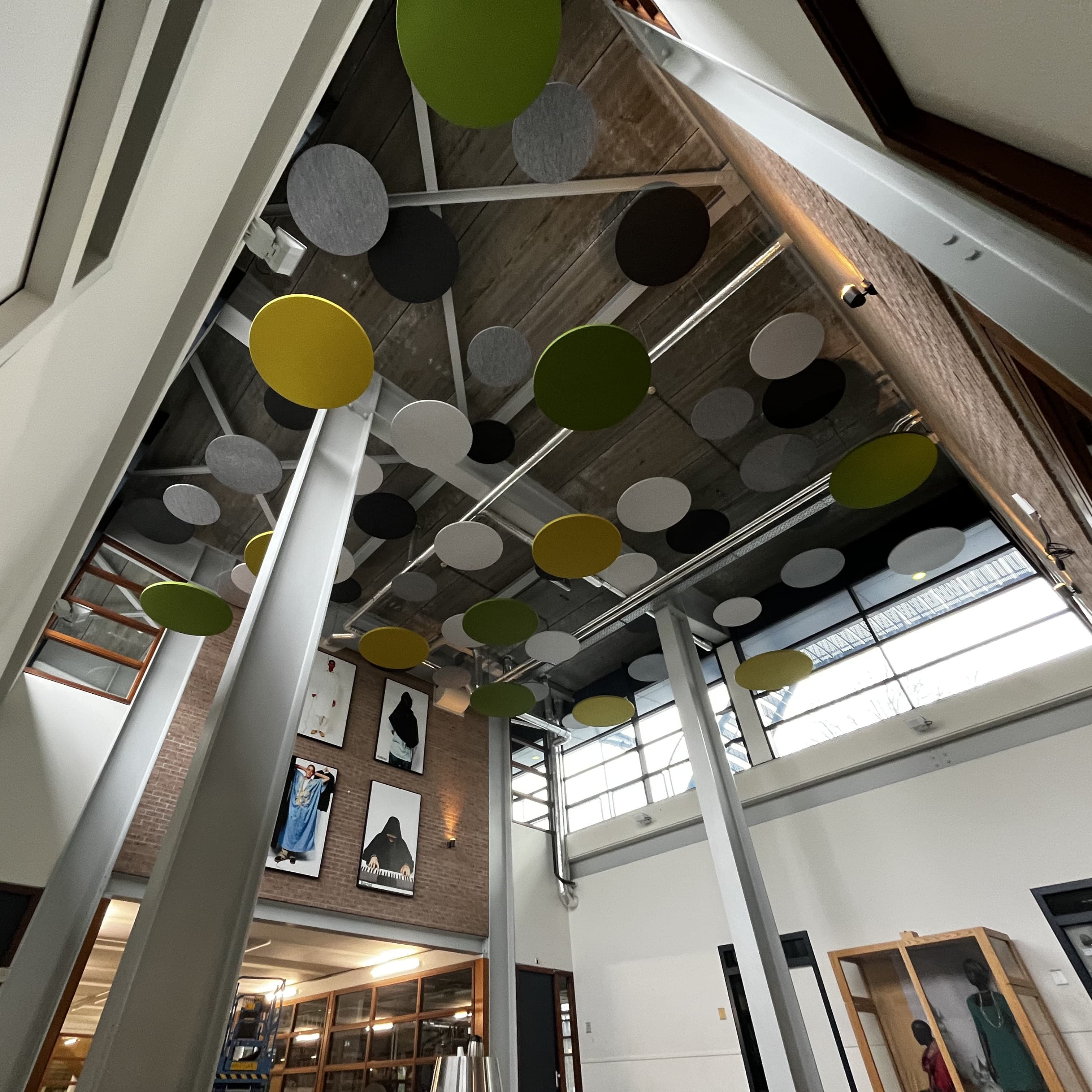
There are also situations where a ceiling solution makes more sense. For example, when wall surface is limited, when the space needs to remain visually calm, or when you want to integrate acoustics as subtly as possible. Especially in larger open spaces, a ceiling application can have a significant impact without dominating the user's line of sight.
For you as a designer, this might be interesting when you want to keep the walls free for glass, artwork, signage or other finishes. Then the ceiling allows you to incorporate acoustics without compromising on wall layout.

Don’t just focus on acoustics, but also consider spatial impact
The choice between wall and ceiling isn't just about performance, but also about how you want a space to feel. A wall solution is often more visible and can contribute greatly to atmosphere, texture, and identity. A ceiling solution generally works more quietly in the visual, but can be very powerful in spatial terms.
That's why it helps to ask yourself: do you want the acoustic solution to be part of the design, or prefer to keep it in the background? The answer to that question often brings you quite close to the right choice.

In many projects, the combination works best.
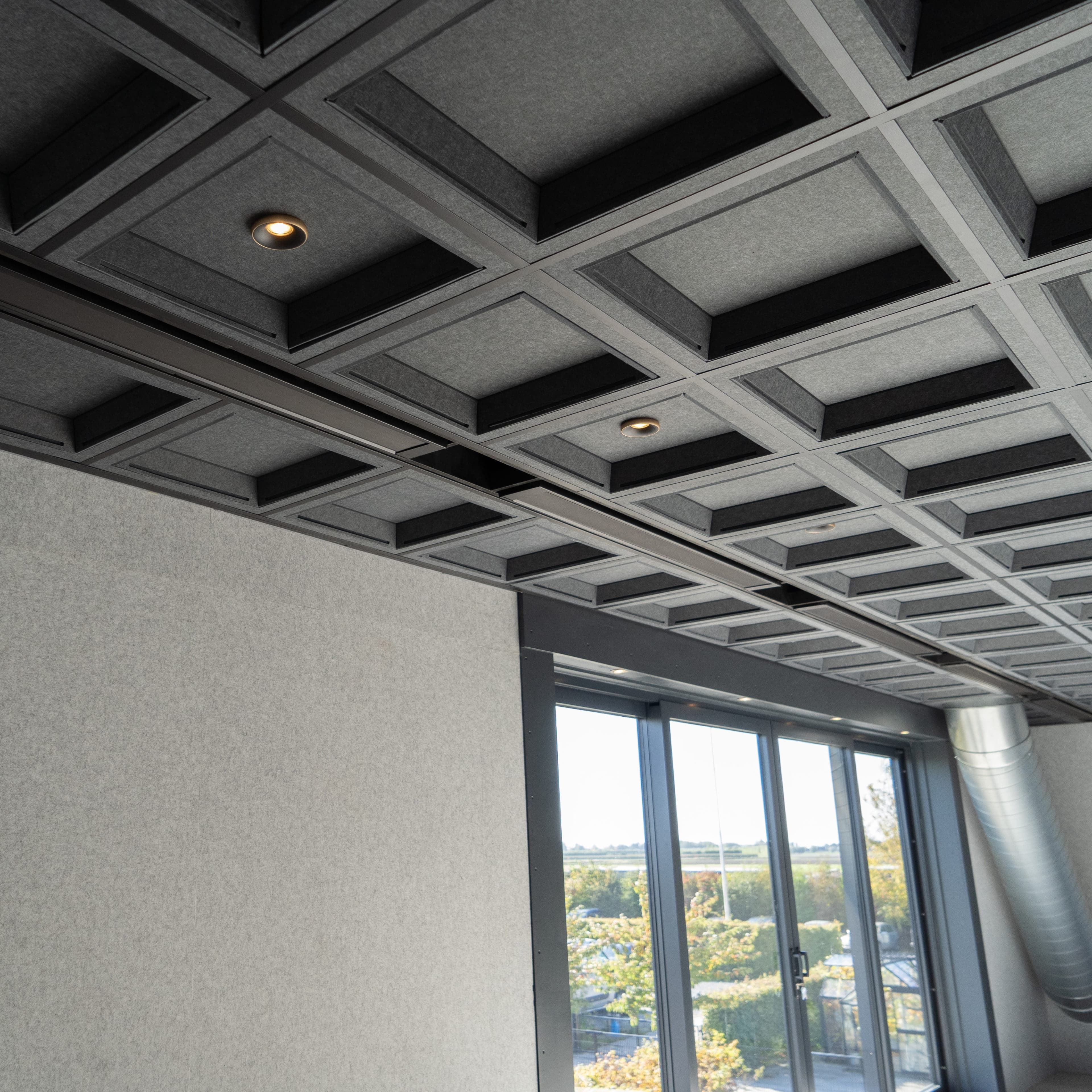
Sometimes the best solution is not either wall or ceiling, but a clever combination. Especially in larger spaces or projects with multiple functions, you can support different objectives with both surfaces. For example, on the wall, you add warmth, recognisability, and visual calm, while on the ceiling, you create extra absorption. By letting PET felt extend from the wall into the ceiling, a single integrated design is created instead of two separate applications.
With PET felt, you can develop that combination effectively because the material lends itself to a variety of applications and can maintain a consistent appearance at the same time. This keeps the design coherent, even when working on multiple levels.

You make the right choice in the context of the whole design
An acoustic solution only works truly well when it makes sense within the space. That is why it is smart not to wait until the last phase, but to determine early on where acoustics will have the most effect, both technically and visually.
Consider the function of the space, the amount of hard surfaces, sightlines, the desired atmosphere, and the areas where your design might need reinforcement. Then the choice between acoustic wall covering and a ceiling solution will not be just a technical decision, but an inherent part of your concept.

Design better by incorporating acoustics earlier
Whether you choose wall, ceiling, or a combination of both: the greatest benefit often lies in the moment you make the choice. The earlier you incorporate acoustics, the better that solution integrates into the design.
And that's exactly where the added value of materials such as acoustic felt lies. They enable comfort and appearance to be connected from the outset, rather than having to correct it afterwards.

Are you unsure whether to choose a wall or ceiling application?
Don't just look at absorption, but also at visibility, atmosphere, and the role that the material is allowed to play in your design. Or get in touch with us, we're happy to think along with you!