










How do you choose the right felt wall panel for your project?
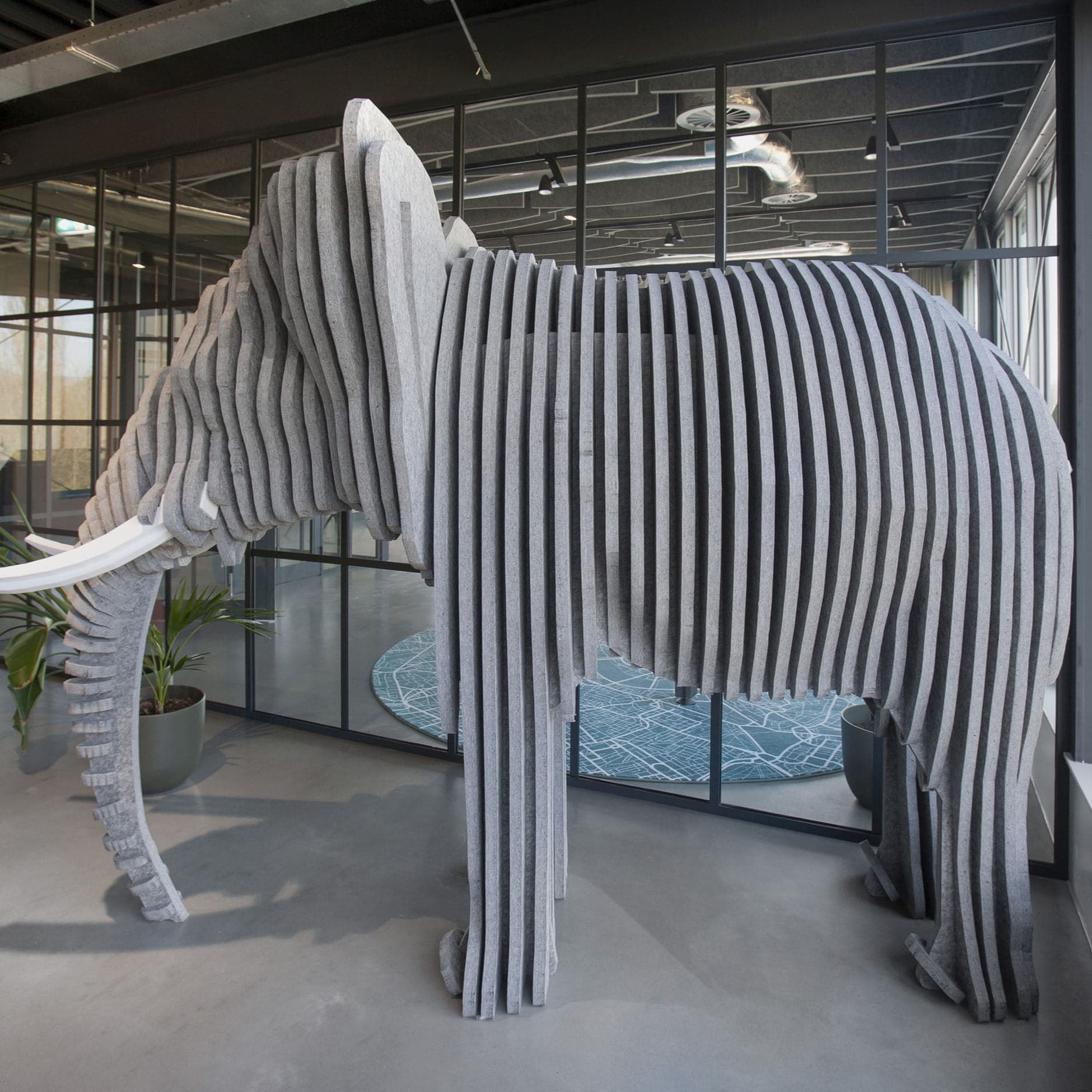
As an architect or interior designer, you want to choose materials that do more than simply look good. You are looking for solutions that contribute to the atmosphere, functionality and overall experience of a space. That is precisely why a felt wall panel is an interesting choice for many projects. It adds warmth and texture, helps improve acoustics and gives you plenty of freedom in terms of shape, colour and application.
Yentl
However, not every felt wall panel is automatically suitable for every project. The right choice depends on the function of the space, the look and feel you want to create and the extent to which acoustic comfort plays a role.
First, consider the function of the space.
The best choice of material does not start with colour or shape, but with how the space is used. In a meeting room, you often want to improve speech intelligibility. In a hospitality environment, it is instead about ambience and comfort. In an educational environment, you are more likely to look for calm, durability and practical solutions.
By first determining what the space needs, you can make the right choice in acoustic wall covering more quickly. Ask yourself: should the material primarily make a visual statement, improve the acoustics, withstand knocks or do it all?

Determine how much acoustic value is needed
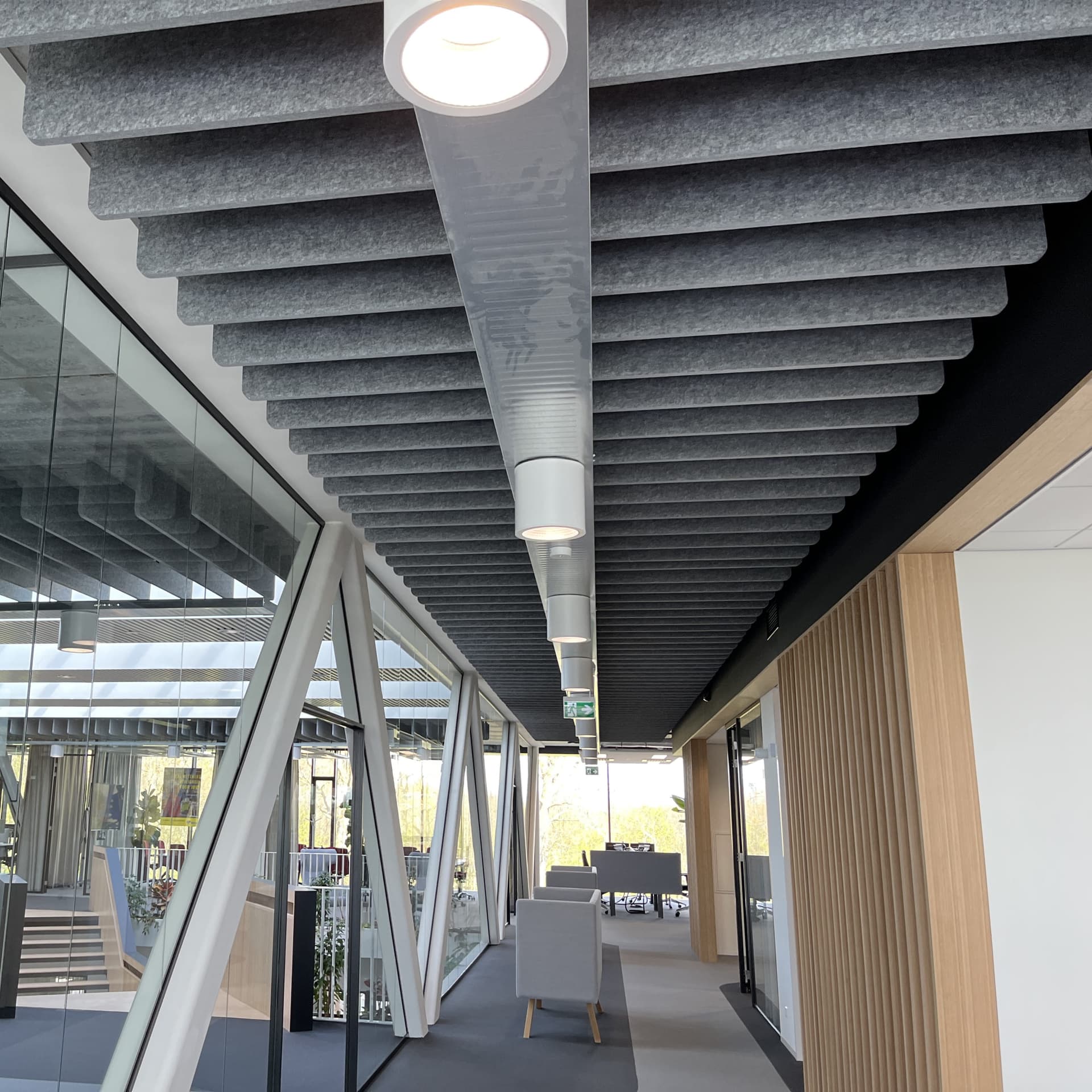
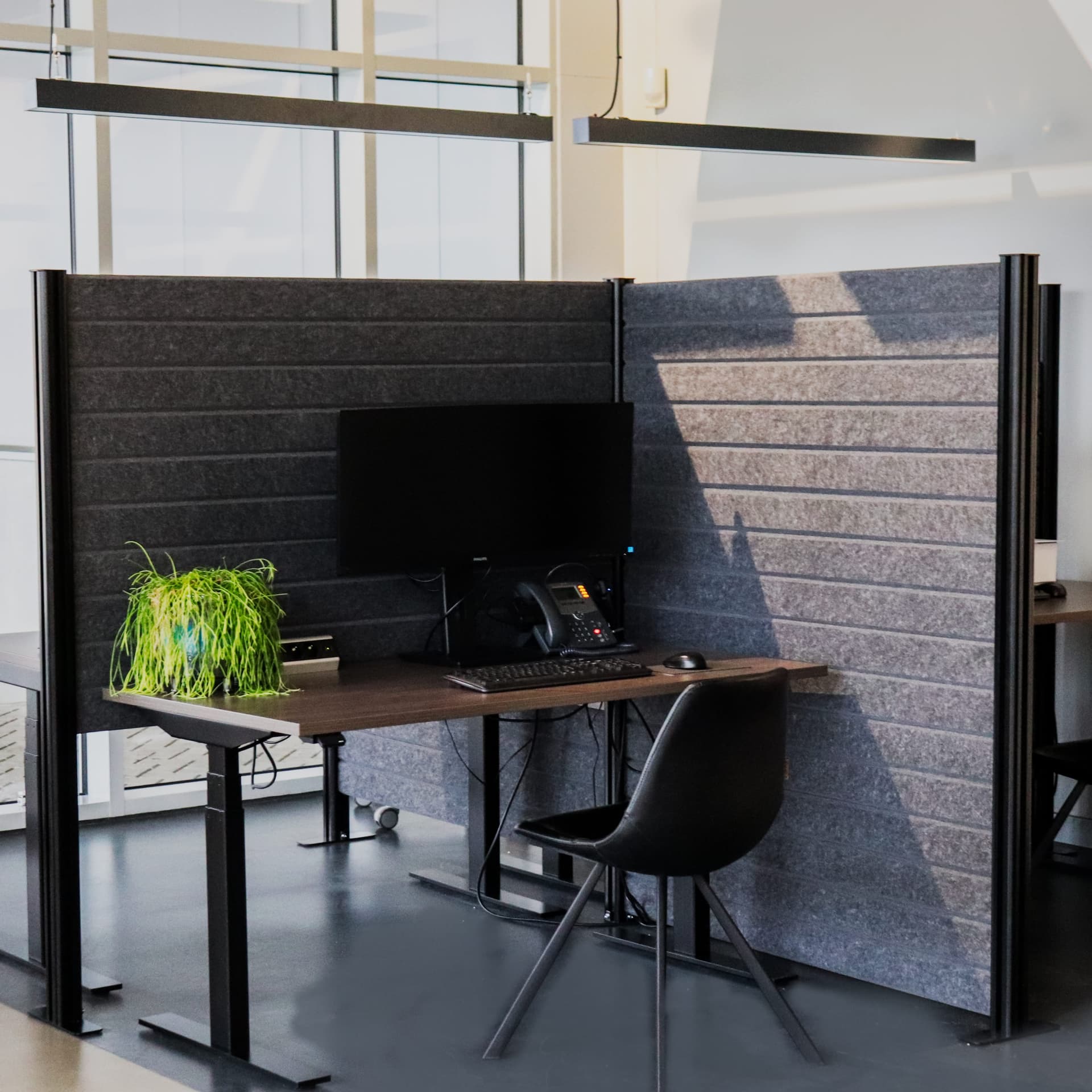
An acoustic felt panel is not just decorative. Especially when working with acoustic felt, you also add functional value to the space. In projects with many hard surfaces, high ceilings or open-plan layouts, a wall application can help reduce reverberation and sound reflections.
However, not every space requires the same acoustic approach. In a representative reception area, a limited application may already be enough to soften the ambience. In an open-plan workspace or meeting area, more surface area is often needed to make a real difference. That is precisely why it is wise to consider at an early stage of the design where you will place the felt wall panel and what effect you expect from it.
Match the look and feel to your design concept
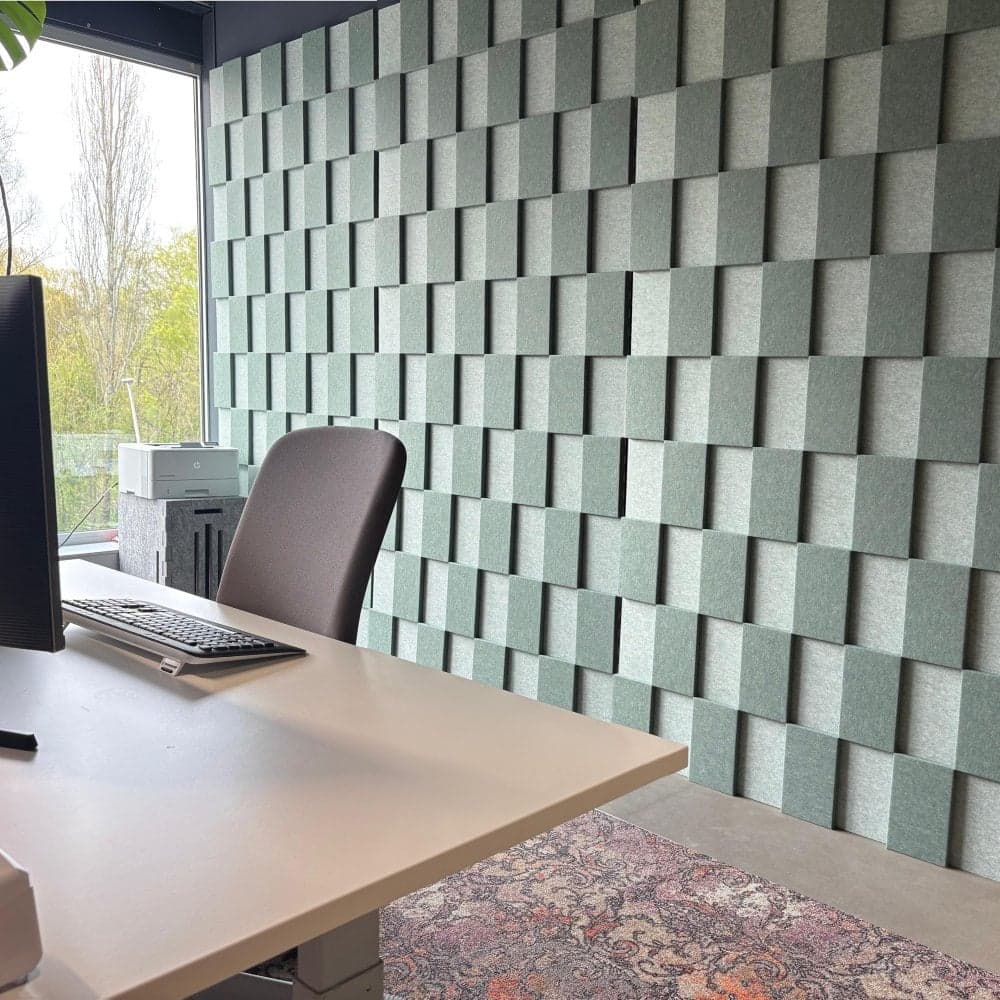
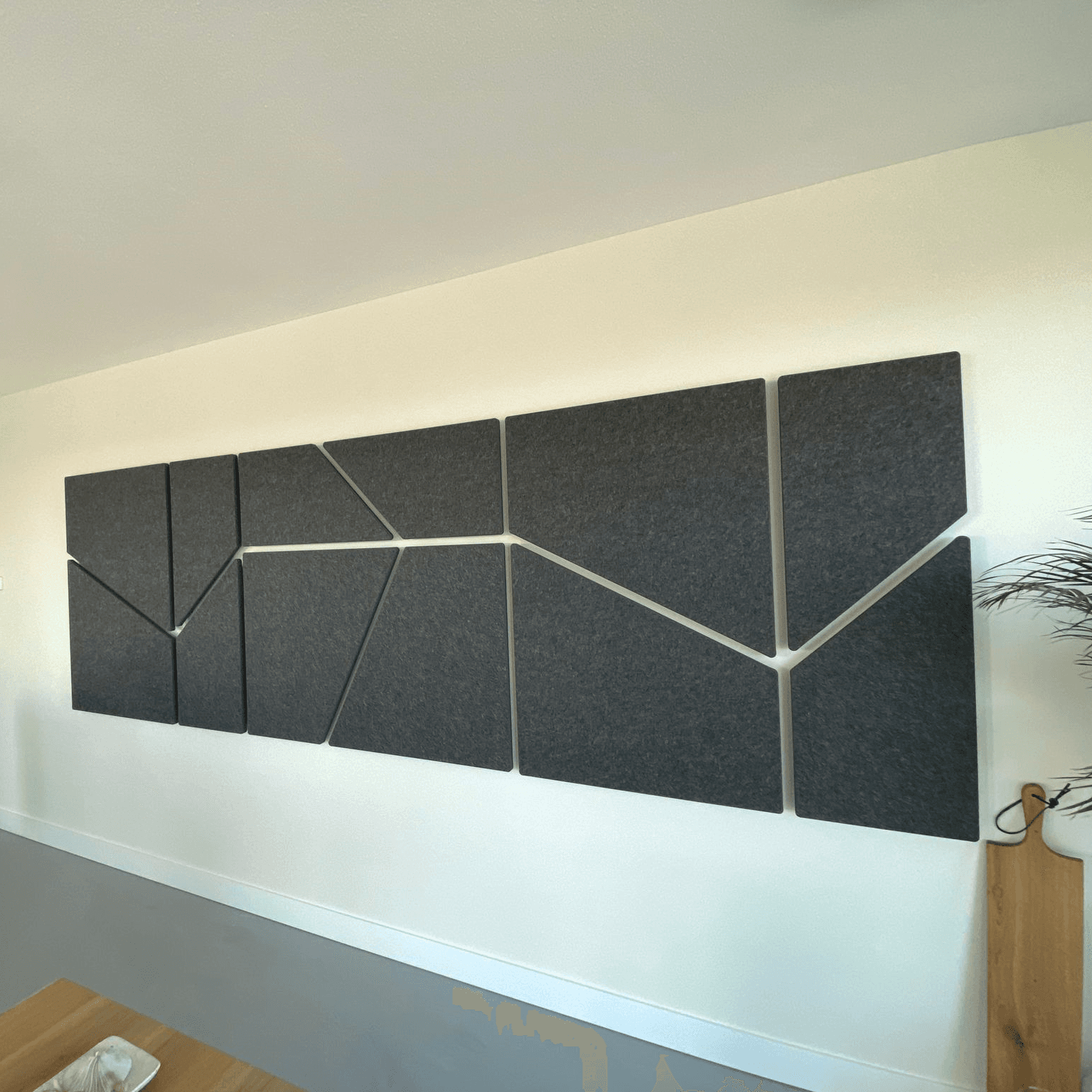
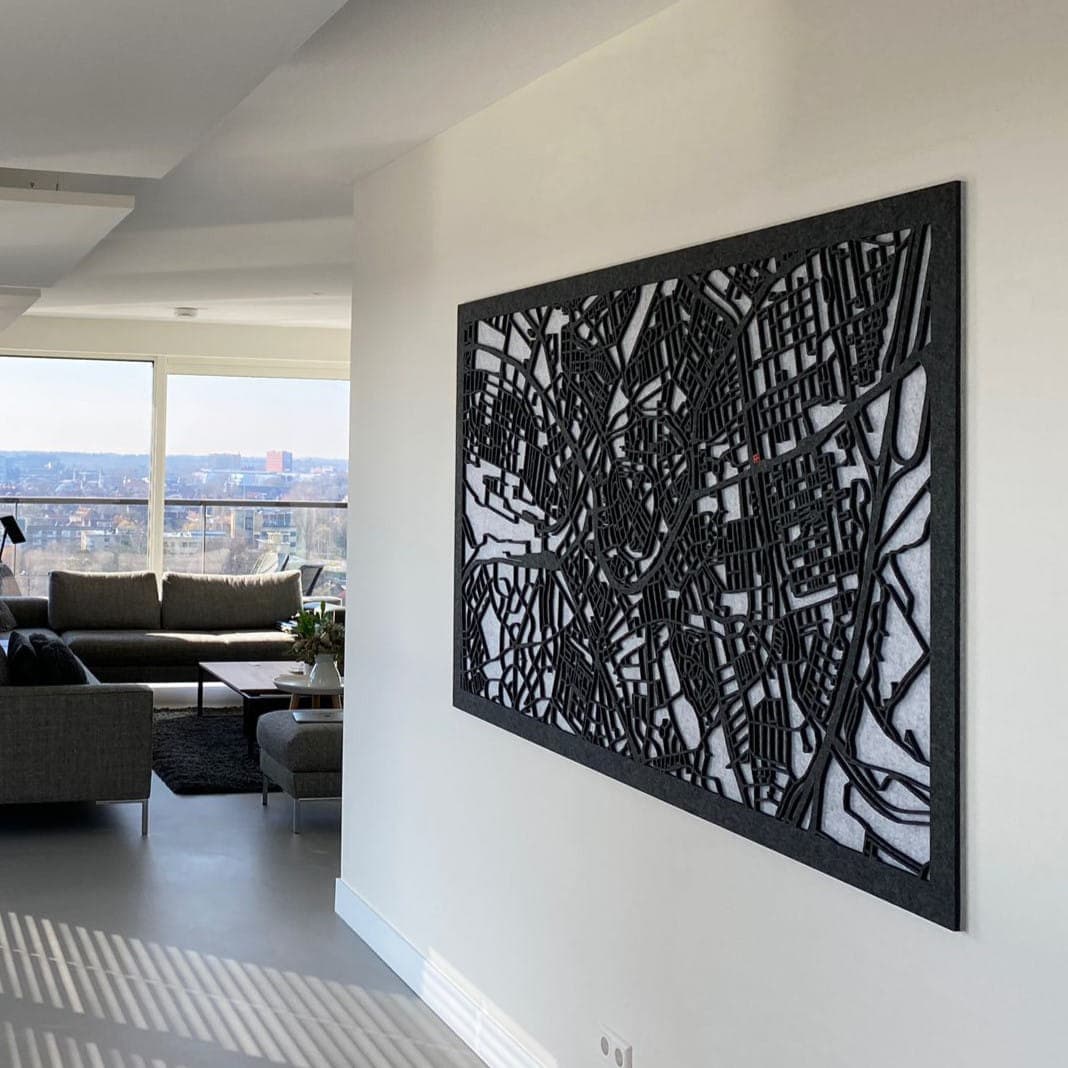
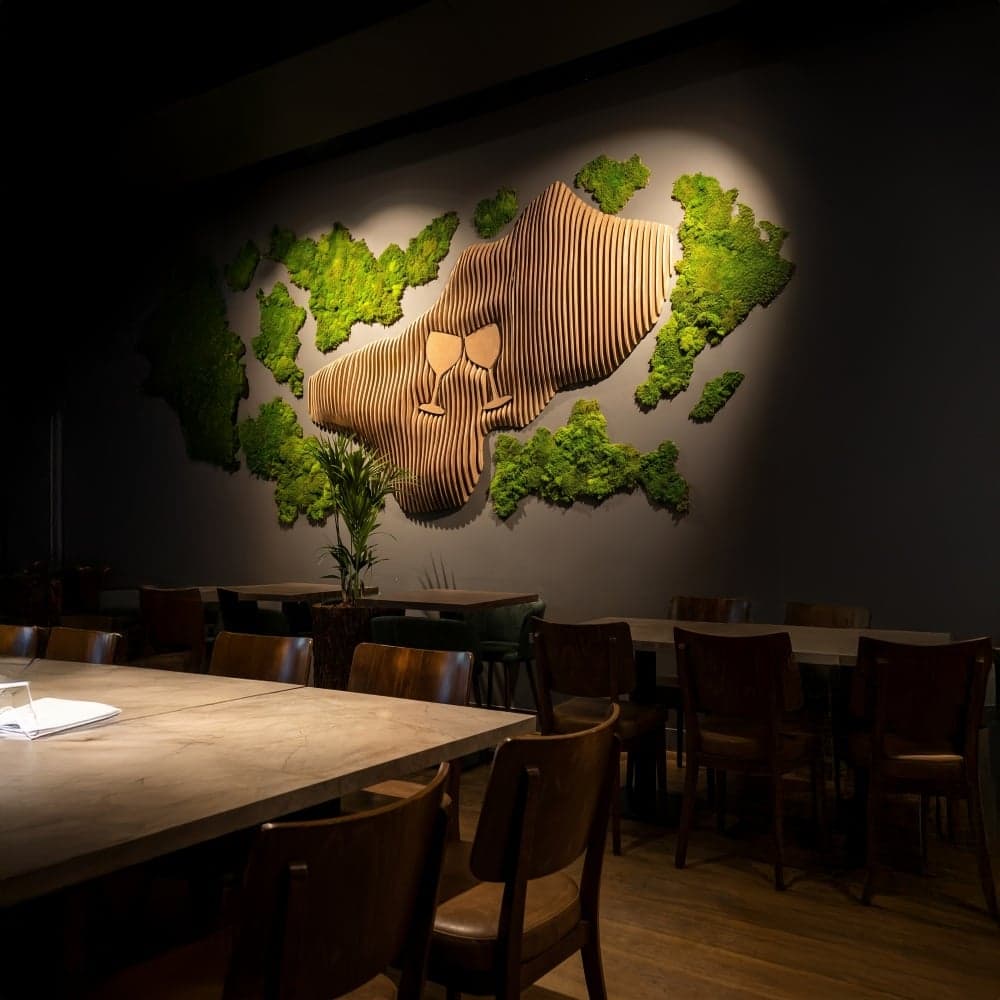
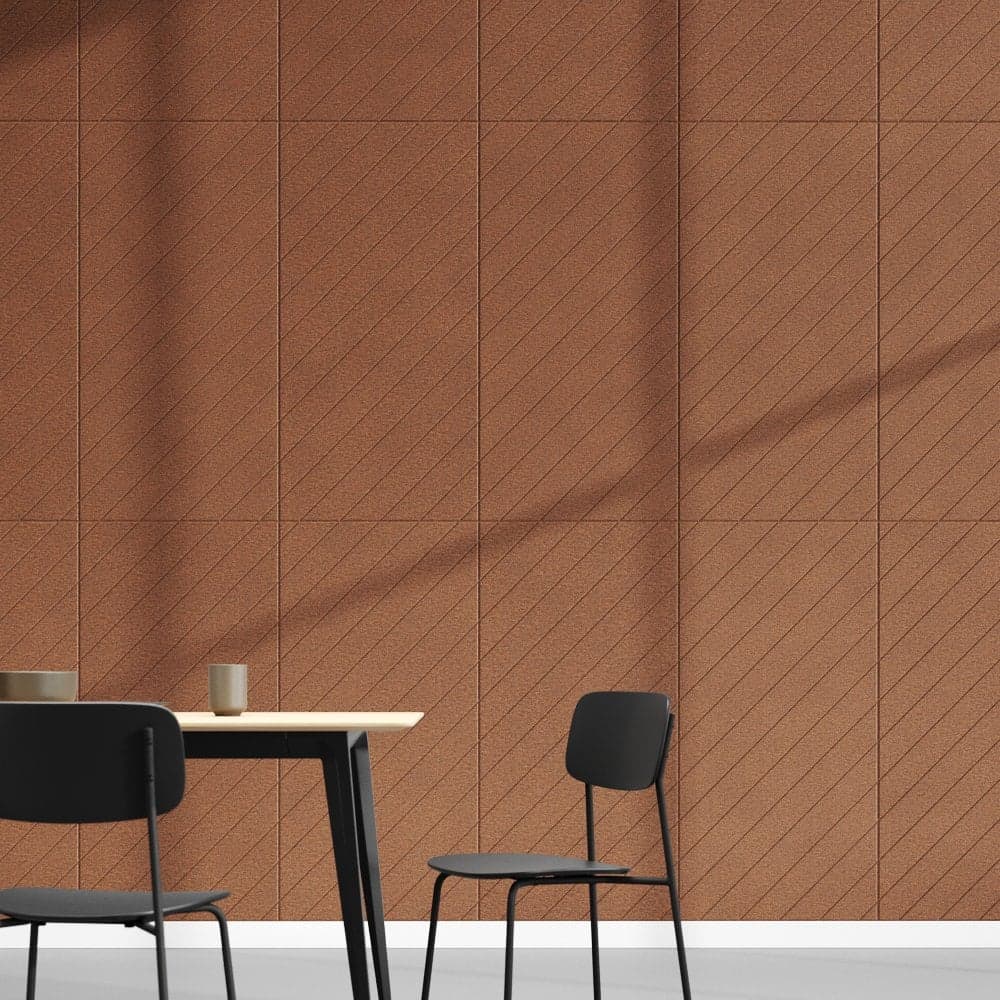
A major advantage of PET felt is that it does not have to look technical. In fact, it can be used in many different ways. Think sleek graphic planes, organic shapes, or distinctive bespoke solutions.
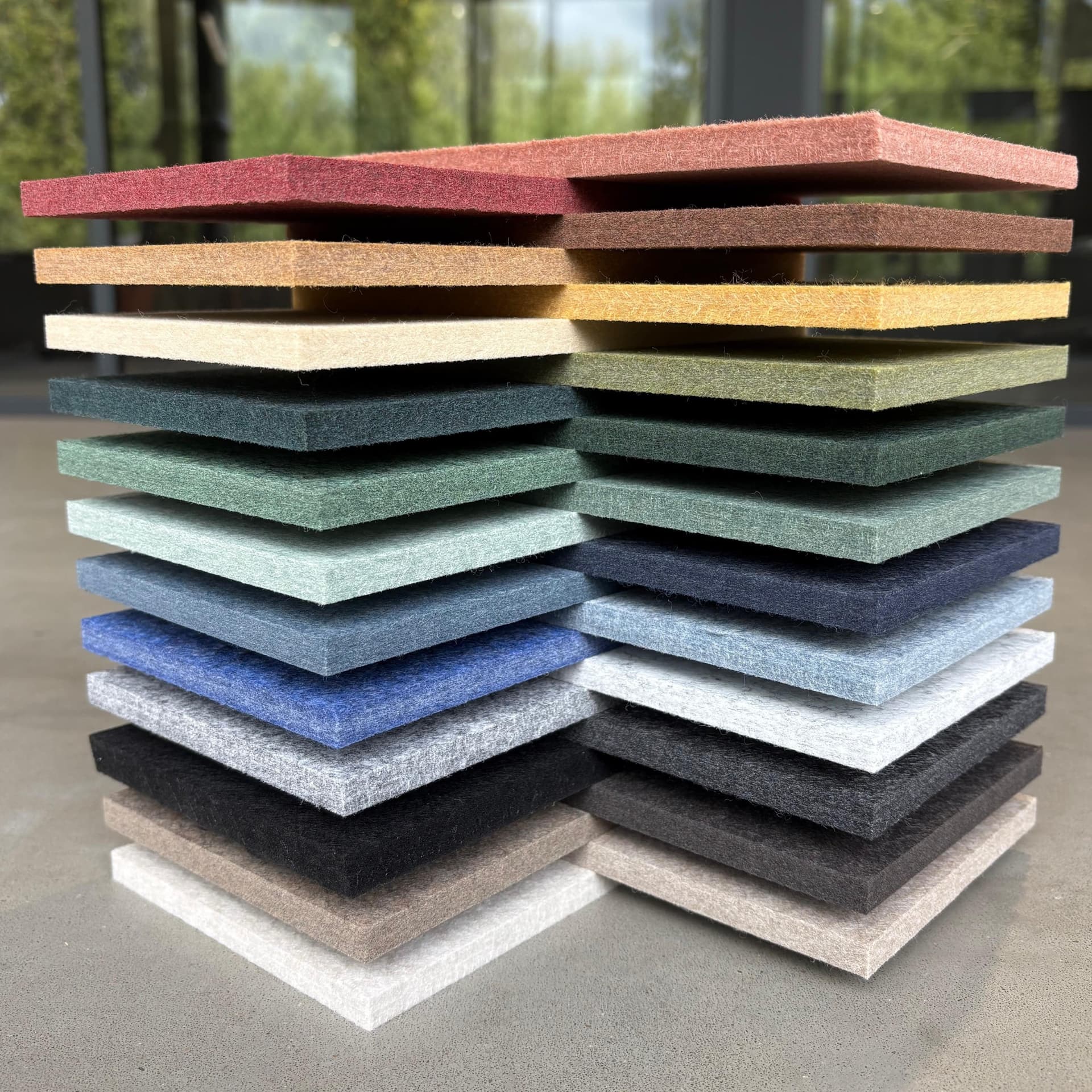
Are you working on a calm and minimalist interior? Then you can opt for a tone-on-tone colour scheme and clean lines. If the concept could use more character, you can play with rhythm, depth, patterns or contrasting colours. This way, felt wall covering becomes not only an acoustic solution, but also a strong part of your design narrative.

Allow for installation and project pace
In practice, it is not just the design that matters, but also feasibility. Especially in B2B projects, planning, installation time and coordination with other parties often play a major role. That is why it is wise to consider the fixing method, the substrate and the desired finish in advance.
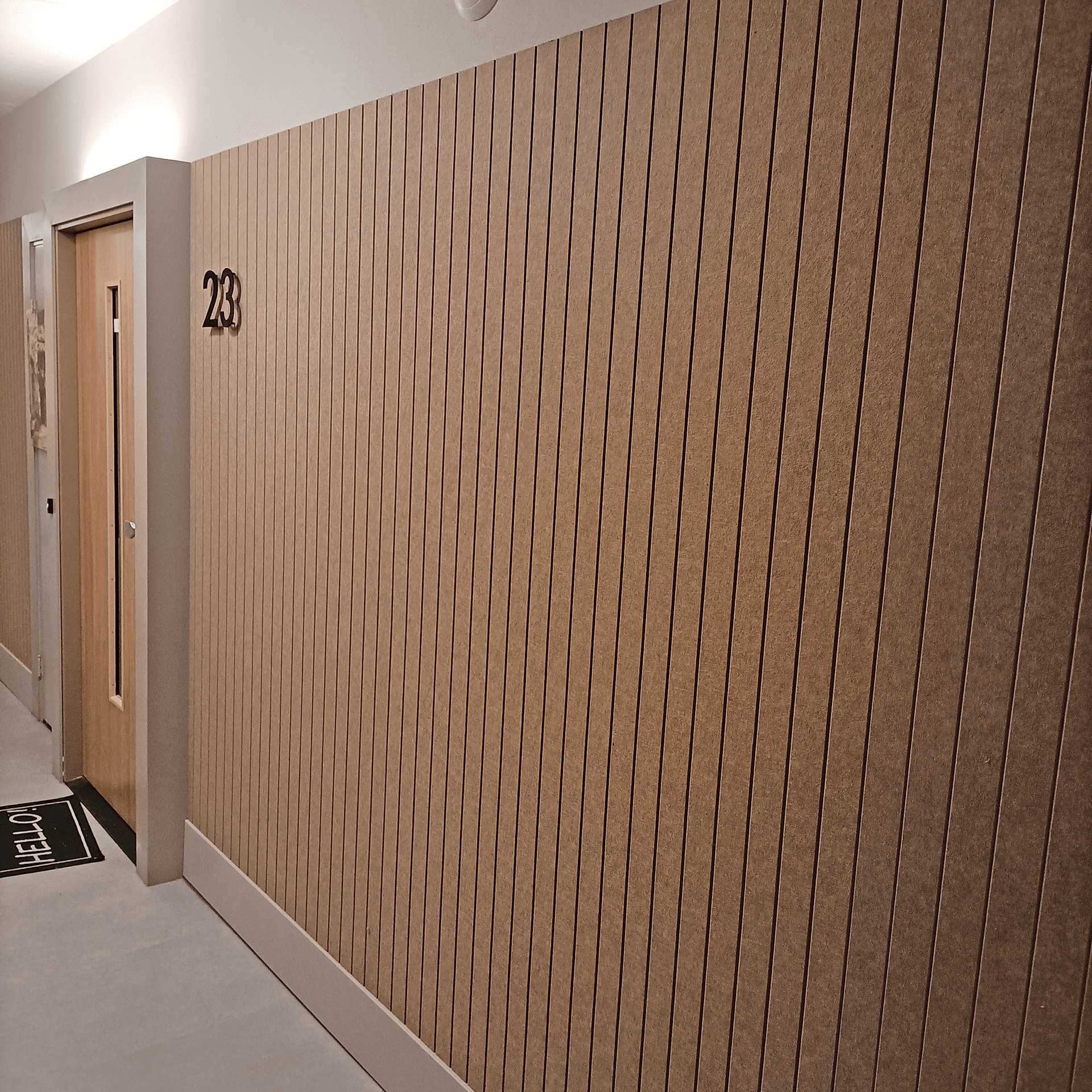
For some projects, a self-adhesive application is ideal, for example when work needs to be completed quickly or when a neat finish is desired. In other situations, screws, a hanging system or a bespoke fixing are more logical. By taking this into account during the design phase, you can avoid delays and additional rounds of corrections.
Choose consciously for each project type
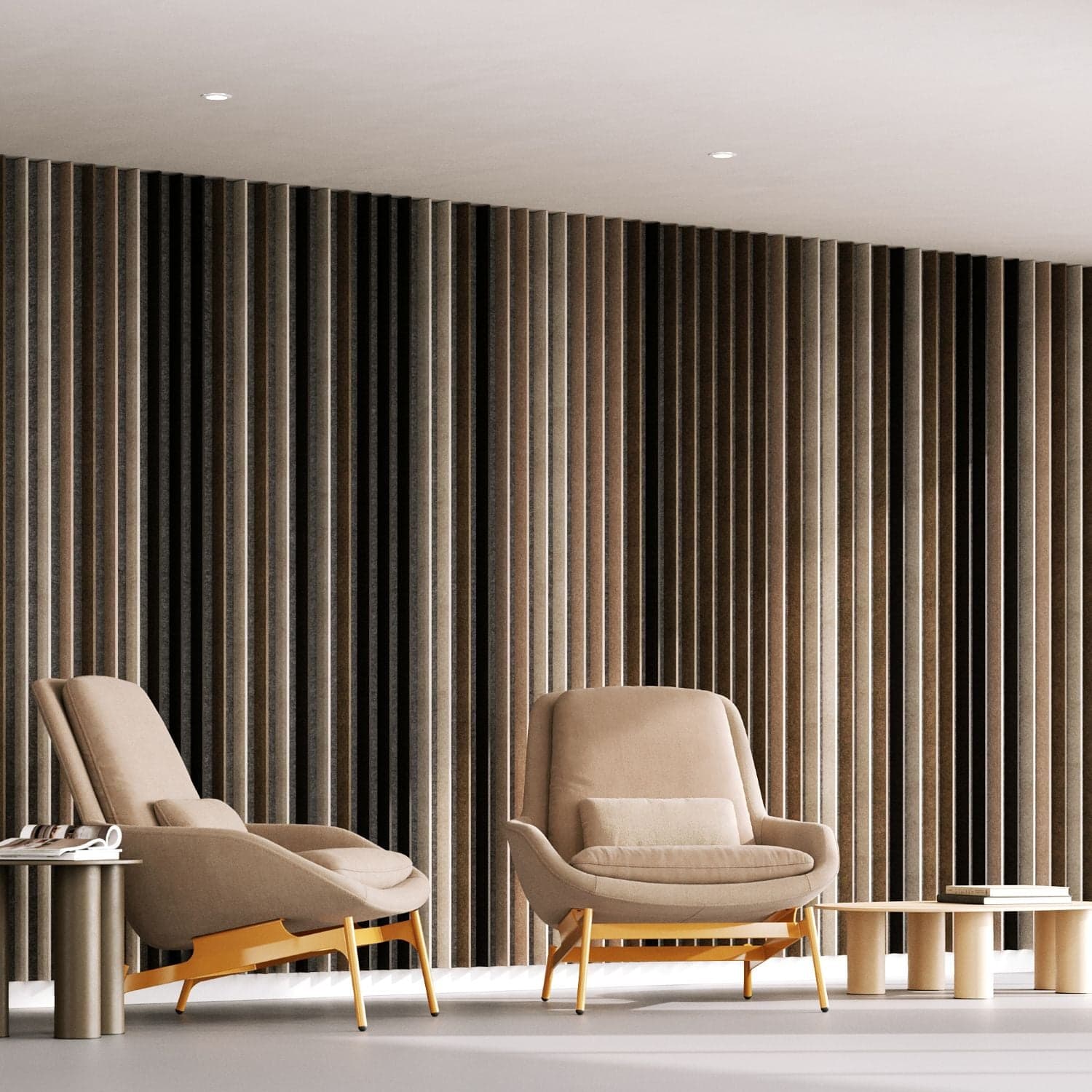
For office environments, felt wall panels often work best when they support calm and concentration without making the space feel visually heavy. In hospitality, the focus is instead on balancing comfort, atmosphere and identity. In educational or public spaces, you often want a combination of durability, ease of maintenance and acoustic improvement.
With felt, you can strike that balance perfectly, precisely because the material is lightweight, versatile and can be applied in any shape. This allows you to design a solution that is not only technically sound, but also fully aligned visually with your concept.

The right choice starts with the right questions
If you choose a felt wall, don’t just focus on what looks good. Above all, consider what the space needs, what matters to your client and how the material needs to perform within the overall design.
The best application is created when aesthetics, acoustics, function and feasibility come together. That is precisely where the strength of a well-chosen felt wall panel lies: it supports your design, enhances the experience of the space and adds value on multiple levels.
Working on a project and want to discuss the right acoustic wall decoration for your space? Get in touch with us; we’d be happy to help!